Silk Sleep Cap Size & Fit Guide for Hair-Care Brands
What to confirm before placing a silk sleep cap private label order — head circumference, closure type, hair-type fit, and how packaging changes perceived fit.
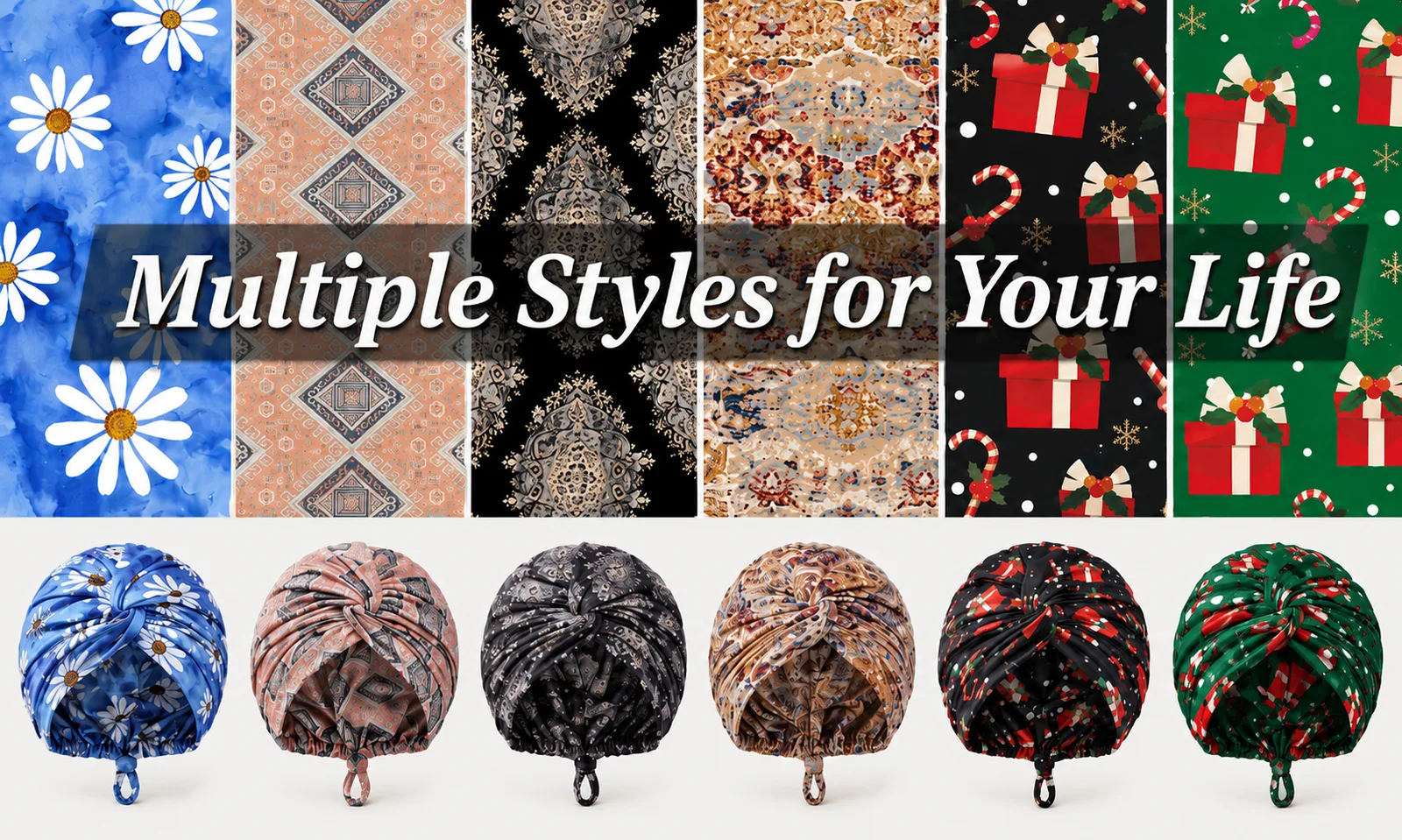
Review the matched product or buyer guide selected in this article.
On this page
For a hair-care brand, silk sleep cap sizing is a buyer decision that drives returns, reviews, and reorders. A cap that slips off at night frustrates the end customer, while one that grips too tightly causes discomfort and complaints. Before a private label order, a sourcing team needs to settle head circumference range, closure type, and how the cap fits different hair types. This guide covers what to confirm, written for brands sampling and buying silk sleep caps and bonnets at wholesale.
Why "one size fits all" rarely works for silk sleep caps
Head sizes vary widely across a customer base, and hair volume varies even more. A single elastic size that suits an average head can slip on a smaller one and pinch a larger one. The fit problem is really two problems: the band around the head, and the room inside the cap for hair. Solve both, or returns climb.
- Too loose, and the cap slides off overnight, which is the most common return reason.
- Too tight, and the customer reports headaches or a red mark, which shows up in reviews.
- Different hair types — straight, curly, coily, braids, and wigs — need different internal volume, not just a different band size.
Head circumference reference (S / M / L)
Most adult heads fall within a fairly narrow band, so a two or three size range usually covers a broad audience. A common starting reference for adults is roughly the mid-50s to low-60s in centimeters, but you should confirm the exact range against your own target market and measure your sample group rather than treat any chart as final.
| Size | Typical fit | Good starting target |
|---|---|---|
| S | Smaller heads, teens, lighter hair volume | Lower end of your measured range |
| M | The broad middle of most adult customers | The center of your measured range |
| L | Larger heads, high hair volume, protective styles | Upper end, with extra internal room |
If your audience skews toward high-volume or protective styles, an extended large with more internal room is worth sampling. Confirm each size on a physical sample with real heads before bulk.
Closure type tradeoffs (elastic vs ribbon vs drawstring)
Closure changes cost, fit precision, and how premium the cap feels.
- Elastic is simple, low cost, and stable in production, but elastic relaxes over time, so band quality matters.
- Ribbon or drawstring feels more premium and lets the customer fine-tune the fit, at the cost of a small learning step.
- A hidden elastic with a decorative ribbon combines a secure band with a giftable look, which suits a gift line.
- Closure also affects how flat the cap packs, so confirm the packaging impact of your chosen closure on a sample.
Fit by hair type (the question buyers actually ask)
End customers ask about their own hair, so your product page and sizing should answer by hair type.
- Straight-hair customers care about static and keeping a morning style.
- Curly and coily customers care about internal volume so the cap does not flatten the style overnight.
- Braids and wig customers care about full coverage and whether the edge causes wear.
- Customers with shaved heads or sensitive scalps care about the skin-contact surface and breathability.
How packaging changes perceived fit
Packaging quietly shapes how a customer judges fit before they even wear the cap.
- A tightly folded, compressed pack can make the cap feel a size small on opening, so a lighter fold reads better.
- A clear window versus an opaque gift box changes whether a retail customer can judge fit on the shelf.
- A hangtag that states size and head circumference in both centimeters and inches reduces guesswork and returns.
- A size card inside the box helps your customer guide their own end shoppers.
Sample order checklist before bulk
Confirm the full fit picture on a physical sample, ideally tried on by several people, before you commit to production.
- ✓Size range and head circumference, measured on real heads
- ✓Closure type: elastic, ribbon, or hidden elastic with ribbon
- ✓Momme and silk material hand-feel
- ✓Color accuracy under normal lighting
- ✓Care label wording and content claims
- ✓Packaging fold and hangtag size information
A strong sample round tries the cap on straight, curly, and braided hair so fit feedback reflects your real customers, not one tester.
When your sizing is ready to test, start a silk sleep cap brief and share your target head circumference range, closure preference, and quantity range so the sample answers your fit questions.
FAQ
My customers' head sizes vary a lot — how many sizes should I make?
Two or three sizes cover most adult audiences. Start with a small, medium, and large around your measured range, and confirm each on a physical sample before adding an extended size.
Is elastic or ribbon better for a retail shelf?
Elastic is lower cost and stable in production, while a ribbon or hidden-elastic closure feels more premium and suits a gift box. The right choice depends on your retail tier and price point.
Should sample fittings include different hair types?
Yes. Try the cap on straight, curly, and braided hair at a minimum, since internal volume needs differ by hair type and a single tester will not surface every fit issue.