Heatless Curler Sample Specification: Rod, Attachments, Set Components and Packout
Build one heatless curler sample specification that controls the rod, securing method, companion pieces, artwork, instructions and final packout as a complete private-label set.
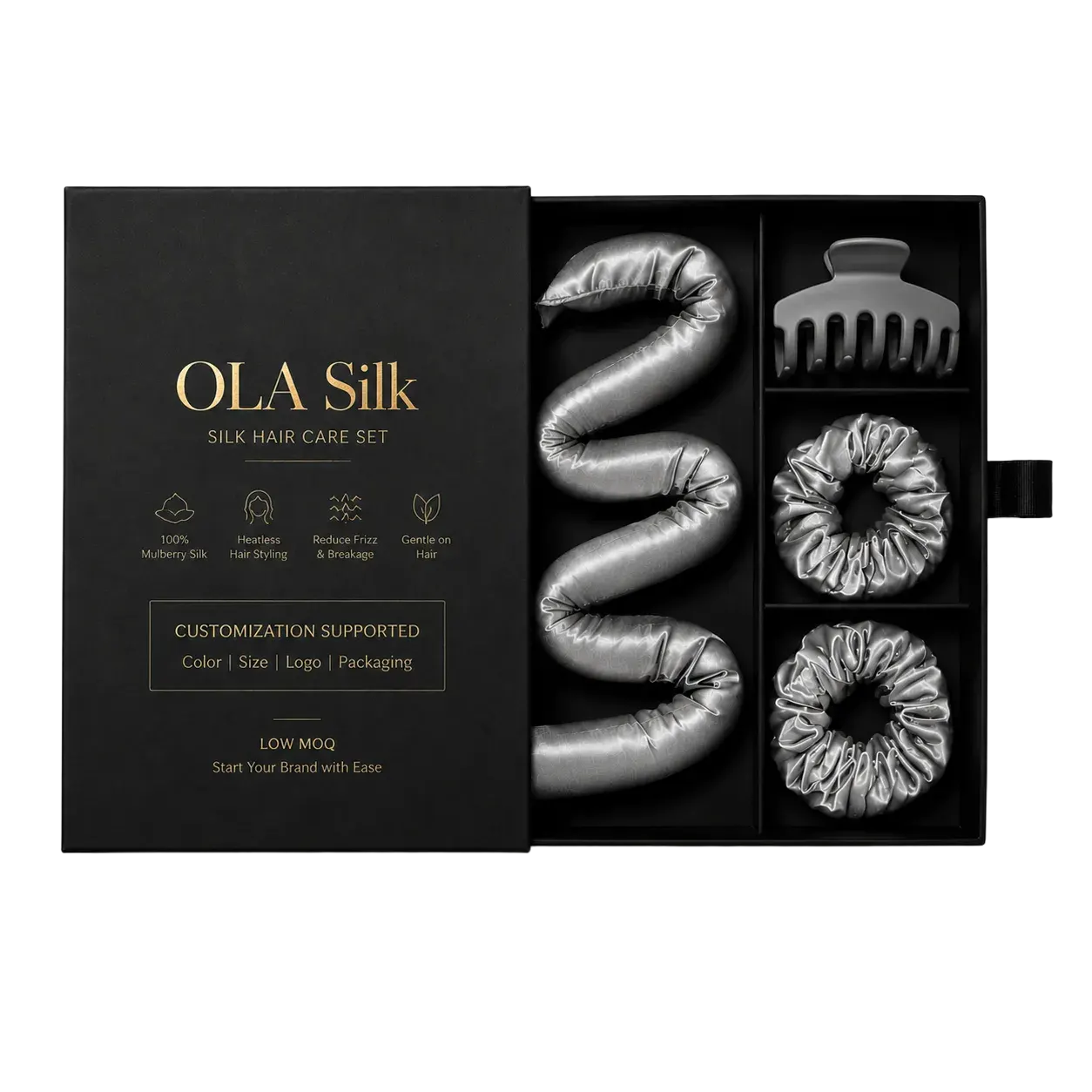
Review the matched product or buyer guide selected in this article.
On this page
- Quick answer: approve one assembled set and one controlled record
- Define the set before reviewing individual pieces
- Record the rod as project fields, not universal defaults
- Use a component-by-component approval matrix
- Inspect ends, seams and the securing method together
- Check every companion item and quantity
- Approve instructions and artwork as controlled components
- Review logo, label and destination scope
- Approve the final packout, not an empty box
- Use approval states and change control
- Heatless curler sample and packout checklist
- Who this process is suitable for
- FAQ
- Should the rod be approved before the rest of the set?
- Can a supplier image define the rod dimensions or filling?
- Does a matching colour prove that companion pieces are approved?
- Should an instruction card be part of the sample?
- What should a buyer retain after approval?
- Prepare a heatless curler sample RFQ
A heatless curler sample specification should approve the complete assembled set, not the rod by itself. For a private-label project, the useful record connects rod construction, cover and seam, the selected securing method, every companion item, artwork, instructions and final packout to one sample round and one version. It also separates what the physical sample proves from what still needs correction or destination-market review.
Buyer decision: confirm which components belong in the sellable set, how each selected component is identified, what the current sample actually shows, and whether the assembled pack can pass, pass conditionally or needs another revision. A product image can show a visible direction; it cannot confirm hidden construction, dimensions, filling density, curl outcome, comfort, hours of use or future bulk consistency.
Quick answer: approve one assembled set and one controlled record
Before production discussion, the sample file should name:
- the project, set code, sample round and specification revision;
- the intended sales channel, customer and non-powered use context;
- every included component and its quantity;
- the rod's project target for length, diameter, filling, cover and seam;
- the selected securing method and how it connects to the rod;
- the colour and version relationship between the rod and companion pieces;
- controlled logo, label, instruction and packaging artwork;
- the actual sample observation, correction owner and next evidence;
- pass, conditional, revise, superseded or open status;
- the dated retained sample or retained reference.
The custom silk heatless hair curlers owner page remains the broad commercial owner. This guide handles the narrower job of controlling one selected set through sample and packout approval.
Define the set before reviewing individual pieces
Start with the intended set, not a catalogue of possible accessories. Give each component a line ID and state whether it is required, optional or excluded from this project. If the intended offer is a rod with two matching scrunchies, the record should not silently substitute a clip, change the scrunchie quantity or add a pouch because another reference image shows a different configuration.
Write the intended channel and presentation next to the set definition. A beauty retail set, hair-care brand launch, travel pouch or multi-item gift programme may use different instructions, artwork surfaces and pack orientation. “Suitable for retail” is too vague to govern a sample. Name the channel, the components the customer receives and the presentation the buyer wants reviewed.
If the project is part of a larger assortment, the custom silk gift sets owner page can frame the wider set decision. It does not prove that this heatless-curler set, its quantities or its final assembly have been approved.
Record the rod as project fields, not universal defaults
The rod record should contain project targets and actual observations in separate columns. Record the landmarks and method used for length and diameter, the selected inner construction or filling description, the cover material direction, the seam position and the end treatment. Do not copy a competitor's dimensions or density into the specification and do not describe one configuration as suitable for every brand.
Inspect the physical sample from more than one view:
- compare the overall profile with the controlled project reference;
- record the actual dimension observations using the agreed landmarks;
- check whether filling is visibly even along the rod;
- inspect the cover for twisting, wrinkles or unintended tension;
- identify the seam location and visible stitch condition;
- inspect both ends and any joining or closing point;
- note any correction by location, not with a general comment such as “improve quality.”
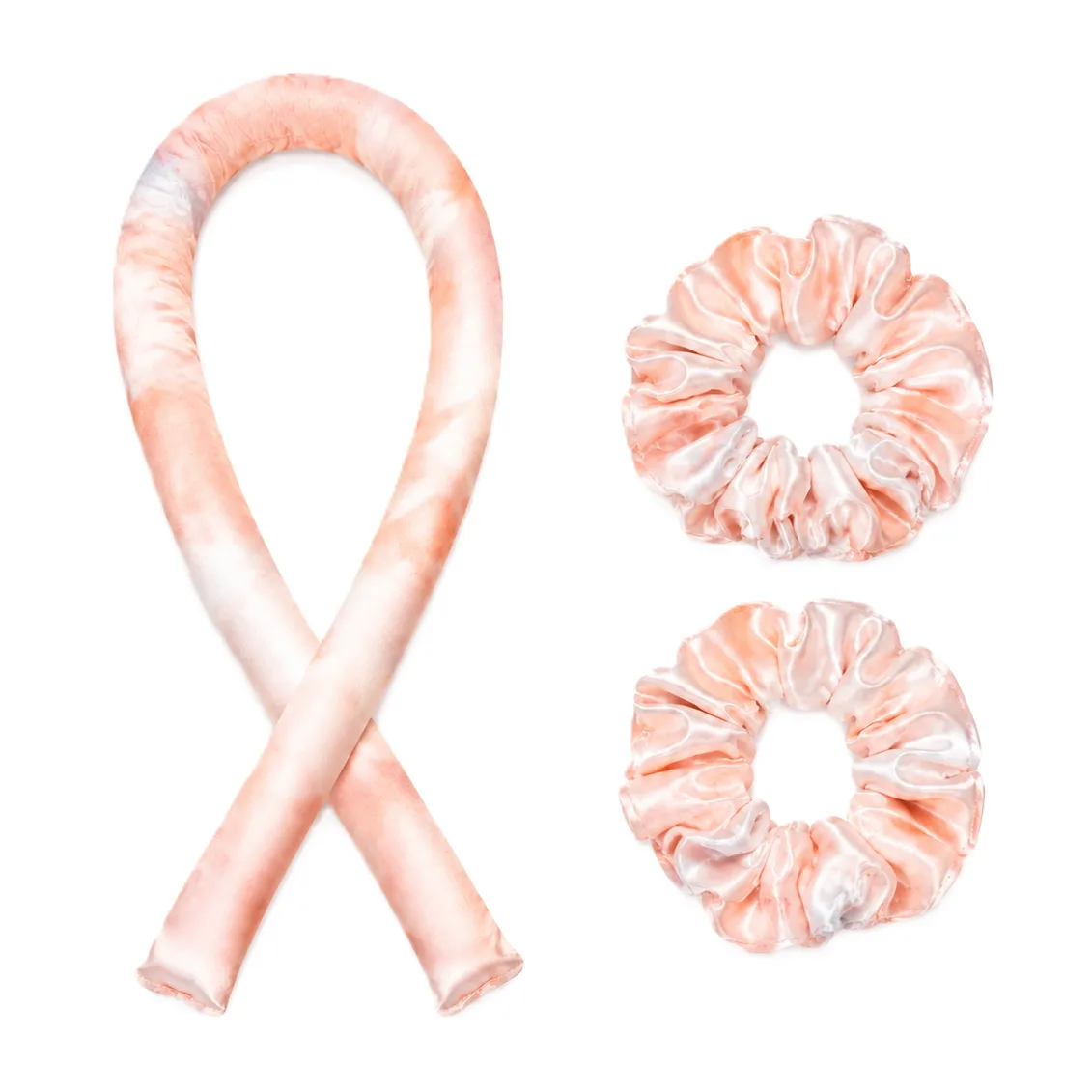
This real OlaSilk image shows a visible padded rod direction and two companion scrunchies. It does not reveal the inner filling, exact dimensions, material test result, comfort, curl performance or approval status. Confirm those fields on the identified physical sample.
Use a component-by-component approval matrix
One matrix keeps the sellable set, the sample evidence and the change history together.
| Line ID | Component | Selected construction | Project target or reference | Sample observation | Correction | Approval state | Version | Retained reference |
|---|---|---|---|---|---|---|---|---|
| 01 | Curler rod | Cover, seam, inner construction and end finish | Controlled project file and measuring method | Record only what the named sample shows | Location-specific action or none | Open / pass / conditional / revise | Spec and sample revision | Dated sample or image set |
| 02 | Securing method | Selected tie, clip, button or other project direction | Connection and use orientation | Check attachment, visible finish and interaction with rod | Named correction and owner | Open / pass / conditional / revise | Component revision | Retained component |
| 03 | Companion scrunchie or cap | Included style, colour relationship and quantity | Set BOM and colour reference | Count, visible construction and match observation | Quantity, colour or construction action | Open / pass / conditional / revise | Component revision | Retained component |
| 04 | Instruction or information card | Controlled copy, language and artwork | Approved content file and destination review | Legibility, orientation and version match | Copy, artwork or placement action | Open / pass / conditional / revise | Artwork revision | Approved file and packed sample |
| 05 | Pouch or box | Selected format, insert and pack orientation | Packaging drawing or approved reference | Fit, movement, visibility and presentation | Structure or assembly action | Open / pass / conditional / revise | Pack revision | Packed retained sample |
Replace every placeholder with the project's controlled inputs and the actual sample observation. This is a decision format, not a published OlaSilk dimension, tolerance or pack standard.
Inspect ends, seams and the securing method together
The selected securing method changes how the buyer handles and reviews the rod. Record whether the project uses a tie, scrunchie, clip, button or another approved direction, then identify where that component sits and how it interacts with the rod in the assembled set.
Check both ends, the seam and the attachment area as one construction path. Photograph the visible front, back and connection point. Record loose areas, exposed edges, bulky joins, uneven finishing or misalignment by location. If the attachment changes, update its component revision and review the assembled interaction again; do not keep the old rod approval while treating the new attachment as unrelated.
A securing method should be confirmed through the brand's intended use review. Do not infer hold, comfort or hair-health performance from a photograph or a product-field description. Any performance statement needs an applicable product, defined method, result and use boundary.
Check every companion item and quantity
Matching scrunchies, caps, clips or other companion pieces need their own line IDs even when they share a colour direction. Record the quantity, intended function in the set, material or construction direction, colour reference, logo or label requirement and version. Then count and inspect the actual items in the assembled sample.
Colour language alone is not enough. Note whether the project expects an exact controlled colour reference, a coordinated family or an intentional contrast. Record the observation under the defined lighting and comparison method instead of promising that one screen image proves a physical colour match.
If a scrunchie is included, treat it as a component rather than importing broad claims about hair breakage or frizz. Those performance claims require evidence covering the specific finished item, method, result and conditions. The set record can confirm presence, quantity, construction and visible match without making an unsupported health or performance claim.
Approve instructions and artwork as controlled components
An instruction card is part of the sample when the buyer intends to pack it with the product. Control the copy, language, artwork revision, dimensions supplied by the project, print method and packed orientation. Check that the physical card matches the approved file and remains legible in the selected package.
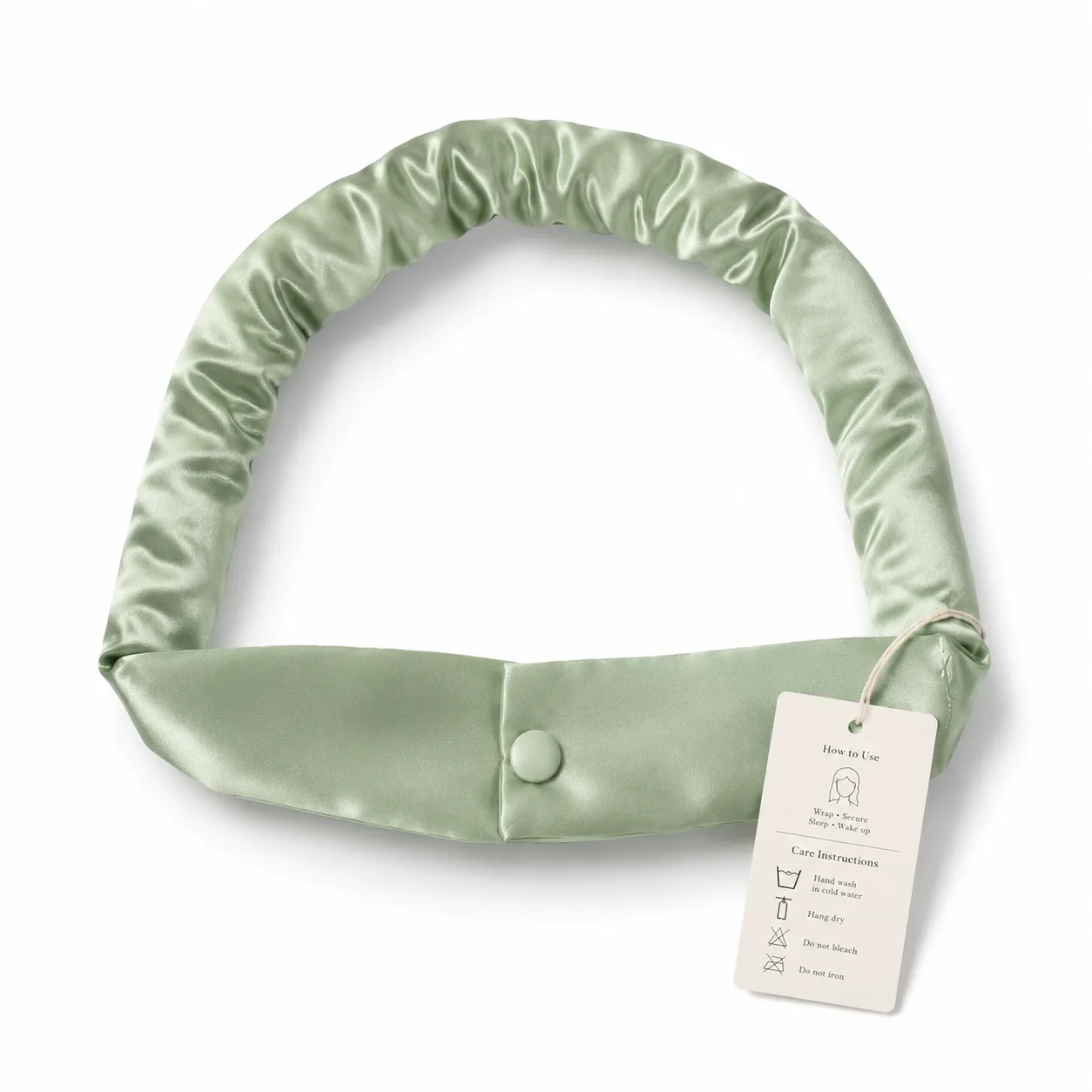
This real OlaSilk image shows one visible instruction-card direction beside a heatless-curler set. It does not prove that its wording, language, dimensions, regulatory status or artwork belongs to another buyer's project. Use the buyer's controlled file and destination-market review.
Keep product-use wording factual and within the observed product. Do not turn an instruction card into proof of curl outcome, comfort, usage duration or a hair-health result. When a claim needs substantiation, keep the sample status open until the applicable evidence and scope are clear.
Review logo, label and destination scope
Record the exact artwork file, revision, colour reference, method, size and position for each logo or label. Check it on the assembled sample and in the final packed orientation. A logo that looks centred on a flat component may be hidden, rotated or crowded once the set is tied, inserted or boxed.
Label obligations depend on product classification, representations and destination. The U.S. Federal Trade Commission's textile and wool labeling guide distinguishes covered and excluded products and explains that some fibre representations can affect disclosure duties. It does not create one universal label layout for every heatless-curler set. Confirm the intended market and applicable requirements for the actual configuration and claims.
For a broader project sequence, use the private-label silk project guide to connect the approved sample, controlled files and later production discussion.
Approve the final packout, not an empty box
Packaging review should use the intended product, every required component, inserts and the selected assembly order. Record how the rod is placed, how companion pieces are secured, where the instruction card sits, what the buyer sees first, and whether the contents move or distort during the project's review.
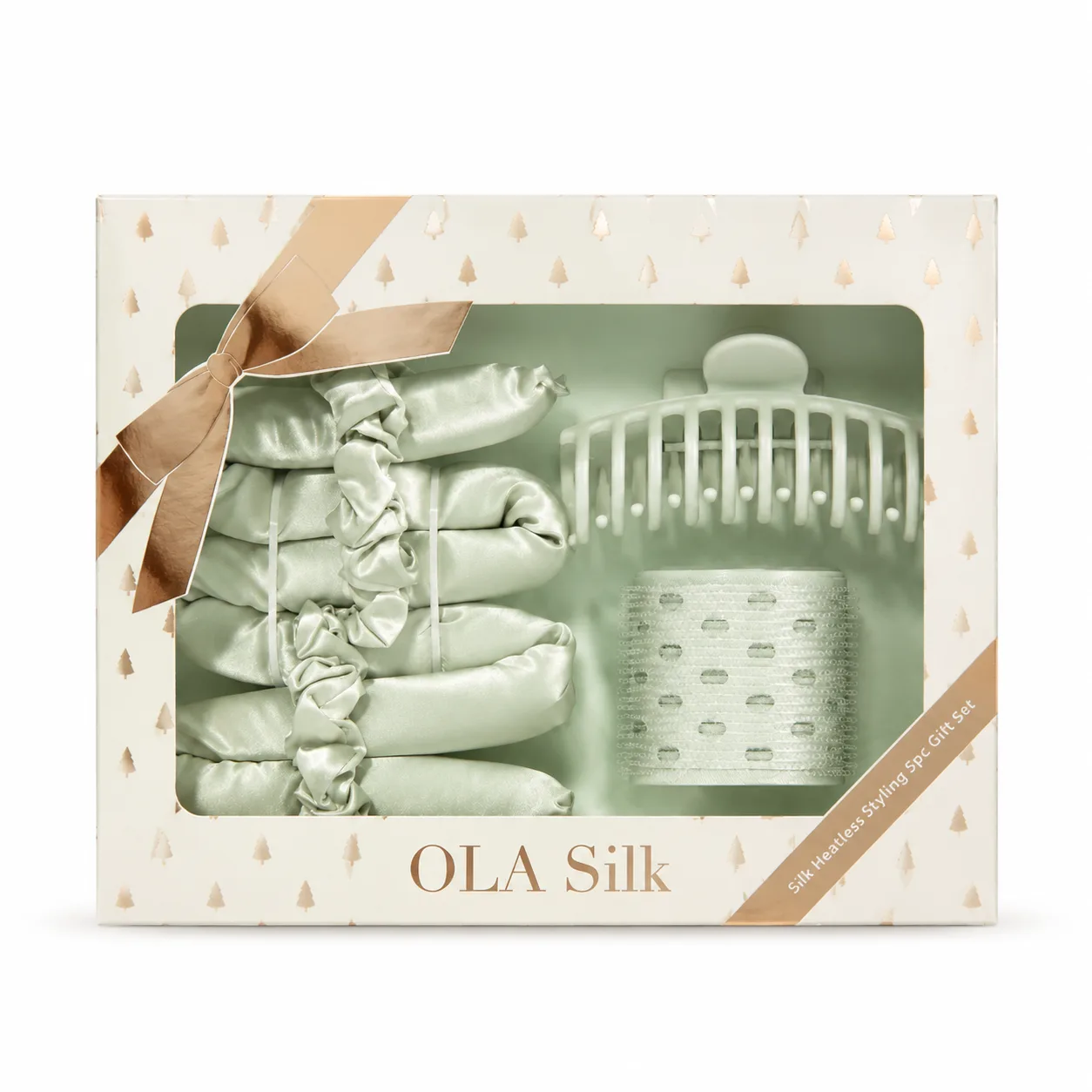
This real OlaSilk image shows one visible paper-box presentation. It cannot confirm the box material specification, dimensions, transit result, destination compliance or approval for another set. Confirm the selected structure and completed assembly on the project's packed sample.
The private-label silk packaging guide can help organise artwork, insert, barcode and packout decisions. Keep the packaging revision linked to the same product and component versions; a revised rod, added accessory or new card can change the required fit and orientation.
Use approval states and change control
| Status | Meaning | Required next step | What stays as evidence |
|---|---|---|---|
| Pass | The identified sample meets the listed project targets for this review | Close the named review and protect the approved version | Signed record, controlled files and retained reference |
| Conditional | The sample can proceed only after the named condition is verified | Assign the condition, owner and evidence date | Current sample, condition and follow-up evidence |
| Revise | One or more fields need another controlled sample or packout | Issue a new revision and keep the old one superseded | Observation, correction, old revision and new request |
| Open | Evidence or a buyer decision is missing | Name the missing input; do not imply approval | Question, owner and due date |
| Superseded | A newer controlled version replaces this one | Prevent accidental reuse in the active BOM | Version history and replacement link |
Do not erase a failed or superseded observation. The change history explains why a later version exists and prevents a team from comparing samples that were built to different component or artwork files.
Heatless curler sample and packout checklist
- Project, set code, sample round and specification revision match the physical sample.
- Intended channel, customer and non-powered use context are written down.
- Every required, optional and excluded component has a line ID and quantity.
- Rod length and diameter use named landmarks and a project measuring method.
- Inner construction, cover, seam and both ends have recorded observations.
- The selected securing method and connection point have been reviewed.
- Companion pieces match the intended construction, count, colour relationship and version.
- Logo, label and instruction files match the physical components.
- Destination-market classification and claim questions have named owners.
- The complete set is assembled in the selected pouch or box.
- Product, inserts and components have been reviewed in final orientation.
- Each correction has a location, owner, next evidence and revision.
- Pass, conditional, revise, open or superseded status is dated.
- A retained physical sample or dated retained reference is identified.
The custom silk product sampling checklist can connect this set-specific record to the wider colour, branding, packaging and sample-round review.
Who this process is suitable for
This process is suitable for beauty, hair-care, retail and gift brands that have selected a heatless-curler direction and need to control a complete private-label sample before bulk discussion. It may not suit a team that is still deciding what belongs in the set or which channel it serves. Close the BOM and use-context questions first, then review the physical assembly.
OlaSilk is a Qingdao source factory for B2B silk projects. Verified project support can include 100% mulberry silk, project-specific momme, colour, logo, label and packaging directions. OEKO-TEX Standard 100, Sedex or ISO 9001 references must remain within their verified and applicable scope; they do not prove a heatless-curler configuration, performance result, comfort outcome or destination compliance.
No image in this article approves a buyer's sample. The final decision belongs to the identified physical set, its controlled files, the actual observations and the dated approval record.
FAQ
Should the rod be approved before the rest of the set?
The rod can have its own construction observations, but the sellable set should not receive final approval until the selected securing method, companion pieces, instructions, branding and packout have been reviewed together.
Can a supplier image define the rod dimensions or filling?
No. An image can show a visible direction. Use the project's named landmarks, measuring method, selected construction file and physical sample to record dimensions and filling observations.
Does a matching colour prove that companion pieces are approved?
No. Confirm the component identity, quantity, construction, controlled colour reference and actual sample observation. A similar screen colour does not replace a physical review.
Should an instruction card be part of the sample?
Yes, when the intended sellable set includes it. Control the copy and artwork revision, then review legibility, position and orientation inside the completed package.
What should a buyer retain after approval?
Retain the signed specification, BOM, artwork and instruction files, dated observations, change history and the identified physical sample or retained sample reference.
Prepare a heatless curler sample RFQ
For a project-specific feasibility review, share the intended set components and quantities, sales channel, rod reference and project measurements, inner-construction direction, securing method, companion-item details, silk and momme direction, colour reference, logo and instruction files, package format, quantity range, destination market, target timing and the decisions that still need development support.