Private Label Silk Headband Sample Review: Padded, Knotted or Elastic
Use one private-label silk headband sample review to compare padded, knotted or elastic construction, record the fit method, inspect seams and branding, and close the packaging and retained-sample decision before bulk discussion.

Review the matched product or buyer guide selected in this article.
On this page
- Quick answer: choose by use case, approve by recorded evidence
- Start with the channel and wearing scenario
- What to review on a padded headband
- What to review on a knotted or wrap construction
- What to review on an elastic-backed headband
- Use a construction comparison before approving the sample
- Record fit and pressure without inventing a universal size
- Inspect seams, branding and packaging as one revision
- Headband sample approval checklist
- Who this review is for
- FAQ
- Is a flat product photograph enough to approve the headband?
- Should padded, knotted and elastic-backed bands use one checklist?
- Can one head circumference or elastic target work for every brand?
- Does choosing a higher momme approve the structure?
- What should be retained after approval?
- Prepare a headband construction RFQ
A private label silk headband sample review should start with the intended wearing and sales scenario, then record what the physical sample actually proves. Padded, knotted and elastic-backed headbands can look similar in a flat photograph while using different bases, joins, tension systems and logo positions. The useful approval record therefore separates visible construction, the project-defined fit method, observed results, required changes and the final sample decision.
Buyer decision: choose the construction for the named channel and use case, then approve the fit method, seams, branding and packout on the identified physical sample. A product image can show a visible shape or finish; it cannot confirm comfort, pressure, fit range, elastic recovery, durability or bulk consistency.
Quick answer: choose by use case, approve by recorded evidence
Do not approve a headband with a one-line note such as “fit is good.” A useful construction and sample record names:
- the project, style code, sample round and current specification revision;
- the intended wearer, channel and wearing scenario supplied by the brand;
- the construction route: padded base, knotted or wrap structure, or elastic-backed band;
- the sample dimensions and measuring method agreed for that project;
- the fit method, wearer or form references and observation duration;
- seam, edge, join, knot, padding and elastic observations;
- colour, silk and momme direction, logo, label and packaging revision;
- actual findings, required action, owner and next evidence;
- pass, conditional, revise or open status;
- the dated retained sample or approved sample reference.
The custom silk headbands owner page shows current product and customization directions. This article owns the construction-and-sample-review decision only; the product page remains the broad commercial owner.
Start with the channel and wearing scenario
Write down where the headband is intended to be sold or used before choosing a structure. A beauty-accessory retail item, spa set, hair-care collection or gift programme may place different priorities on silhouette, width, pack presentation and how the product is reviewed on a wearer.
Record the intended scenario in plain language. Include whether the band is expected to hold hair away from the face, act as a decorative accessory, sit inside a coordinated set or present on a retail card. State the intended wearer references supplied by the brand instead of assuming one universal head size or fit.
If the team is still comparing a headband with a softer gathered accessory, review the custom silk scrunchies range as a separate product decision. A scrunchie image or keyword must not be used to claim that a headband construction has been approved.
What to review on a padded headband
A padded construction uses an internal base or padding direction to create its visible profile. The sample review should identify the base, the padding or build-up description in the working specification, the silk covering, the underside treatment and every point where the covering is joined or closed.
Check the physical sample for:
- left-to-right profile and whether the visible build matches the controlled reference;
- end finishing and any exposed, sharp, uneven or bulky area;
- covering alignment, gathers, pleats or wrinkles that are part of the design;
- seam or closure position on the underside;
- logo or label position when the band is flat and when it is worn;
- whether the agreed packaging changes the shape during presentation or storage.
Do not turn “padded” into a comfort or pressure claim. Record the wearer, method and actual observation. If a different base, padding build or end finish is needed, change the specification revision and review the next physical sample.
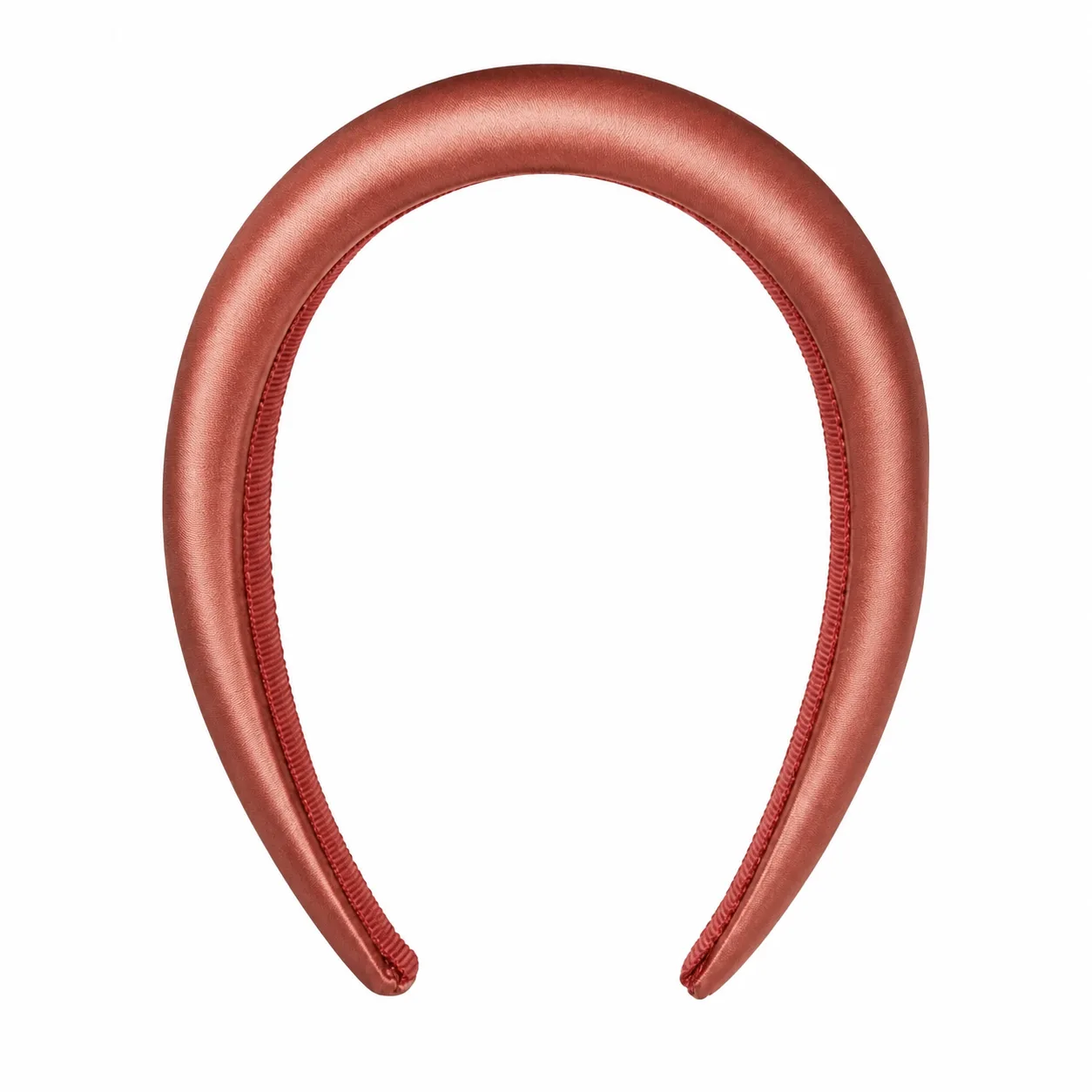
This real OlaSilk image shows a visible padded headband direction. It does not show the internal base, padding specification, wearer pressure, comfort, durability or approval result. Those items still need a named construction file and physical sample review.
What to review on a knotted or wrap construction
A knot, twist or wrap can be decorative, structural or both. The working file should state whether the visible centre is fixed, stitched, tied, wrapped or assembled around another base. Photograph the front, underside, ends and any hidden join so the approval does not depend on one beauty view.
Record:
- the intended knot, twist or wrap orientation;
- the point where the left and right sides meet;
- visible symmetry or intentional asymmetry;
- bulk under the knot and the underside finish;
- alignment of print, piping or colour blocking when relevant;
- movement of the visible centre during the project-defined wear review;
- logo, label or card position relative to the knot.
Two current public headband case sources are separately flagged for content repair in the read-only production manifest. Their images can help identify a visible construction hypothesis, but their saved names, descriptions and “Produced For” fields are not source evidence for this draft. For that reason, this review does not import claims or specifications from those case fields and does not use them as publication facts.
What to review on an elastic-backed headband
An elastic-backed band needs a project-defined relaxed state, extended state and recovery observation. The specification should identify the elastic or stretch section, where it joins the silk body, how the join is covered and which dimension is measured in each state.
Use the same method for every review round:
- identify the exact sample and specification revision;
- record the relaxed dimension using the agreed landmarks;
- extend only according to the project's named method or wearer reference;
- record the observed state during and after the review;
- inspect the elastic-to-silk joins and any visible distortion;
- decide whether to keep, revise or investigate the construction.
Do not copy a competitor's universal circumference, extension percentage or recovery threshold. Those values depend on the actual structure, elastic, size direction and wearer brief. A useful record shows the agreed project target, the method and the observed result rather than presenting one number as suitable for every brand.
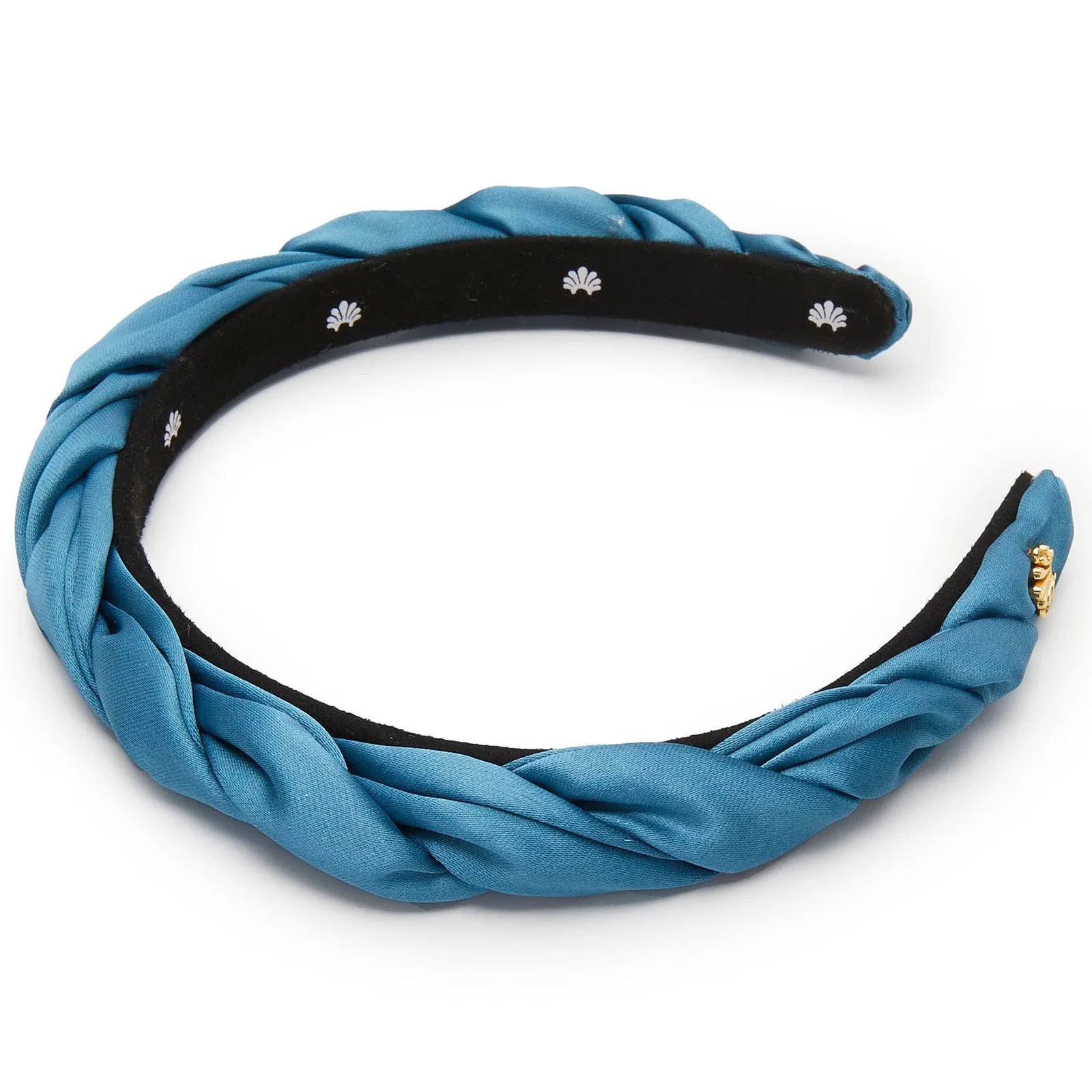
This real OlaSilk image shows a visible elastic-backed and gathered direction. It cannot confirm the elastic specification, extension, recovery, fit range, pressure, comfort or bulk result. Confirm those items on the identified sample with the project method.
Use a construction comparison before approving the sample
Keep selection evidence and pass/fail evidence in separate columns.
| Construction | Record before sampling | Inspect on the physical sample | Decision evidence |
|---|---|---|---|
| Padded base | Intended profile, base or padding direction, covering and end finish | Profile, covering alignment, underside seam, ends, logo position and pack shape | Actual observation, image reference, change owner and current revision |
| Knotted or wrap | Knot or wrap method, orientation, joining point, print or trim direction | Front and underside shape, bulk, alignment, movement and hidden join | Named observation, required correction and retained reference |
| Elastic-backed | Relaxed state, project-defined extension method, join construction and covered area | Relaxed/extended observations, join finish, visible distortion and recovery observation | Project target, actual result, method, reviewer and status |
The table is a project-control format, not an OlaSilk universal specification. Replace every placeholder with the brand's approved inputs and the actual sample observation.
Record fit and pressure without inventing a universal size
A fit note needs context. Record which person, form or brand-supplied size reference was used, how the band was positioned, the duration or activity defined for the review and what was observed. If the brand wants more than one wearer reference, list them separately instead of averaging the result into “one size fits all.”
Keep observation and diagnosis separate. “Band moved behind the ear during the named review” is an observation. The cause may involve dimension, base shape, elastic direction, padding, knot position or another factor that still needs investigation. Name the next test or sample change rather than guessing.
Momme is a fabric-weight direction, not a fit result. OlaSilk projects can discuss 100% mulberry silk and project-specific momme selection, but the appropriate direction depends on the construction, appearance, hand feel and sample behaviour. Confirm the actual silk, momme, colour and construction together on the sample; do not use the fabric choice alone to promise comfort, stability or durability.
Inspect seams, branding and packaging as one revision
After the basic construction and fit review, inspect every visible and hidden seam, edge, end, elastic join and closure area. Record skipped or uneven stitching, puckering, exposed raw areas, bulky overlaps or alignment differences as observations tied to a location and image.
Connect branding to the same sample revision. Record the logo or label artwork file, colour reference, method, position and packed visibility. A mark that looks centred on a flat band may shift or disappear when the band is worn, gathered or placed on a retail card.
Packaging must use the same approved product revision. The private-label silk packaging guide can help connect the band, card, pouch, label, barcode and packout record. For coordinated programmes, the custom silk gift sets owner page shows the broader product-set decision; it does not prove that a particular headband and package have passed assembly review.
OlaSilk is a Qingdao source silk factory for B2B private-label projects. Verified support can include 100% mulberry silk, project-specific momme, colour, logo, label and packaging directions. References to OEKO-TEX Standard 100, Sedex or ISO 9001 support must stay within the verified and applicable scope; they do not prove headband fit, pressure, elastic recovery, durability or sample approval for a named product.
Headband sample approval checklist
- Project, style code, sample round and current specification match the physical sample.
- Intended channel, use case and wearer references are written down.
- Padded, knotted/wrap or elastic-backed construction is defined rather than inferred from a photograph.
- Sample dimensions use named landmarks, units and preparation states.
- The fit method records the wearer or form, placement and observation conditions.
- Padded profile, ends, underside and covering are reviewed where applicable.
- Knot, twist, wrap, hidden join and alignment are reviewed where applicable.
- Relaxed, extended and recovery observations are recorded where elastic is used.
- Seams, edges, joins and visible distortion have location-specific notes.
- Silk, momme, colour, logo, label and packaging files match this revision.
- Actual observation, action, owner and next evidence are separate fields.
- Pass, conditional, revise or open status is dated and linked to a retained sample.
The wider custom silk product sampling checklist can connect this construction review to colour, branding, packaging and sample-round control.
Who this review is for
This workflow suits beauty, hair-care, spa, retail and gift brands that have narrowed a silk headband direction and need a controlled physical sample decision before bulk discussion. It may not suit a team that has not chosen the intended use, construction route or wearer references. Close those upstream questions first, or keep the sample status open.
It is also not a substitute for a performance test. Comfort, pressure, hold, recovery and durability claims require a defined method, applicable sample, result and acceptance boundary. A style field, product image or supplier statement alone is not that evidence.
FAQ
Is a flat product photograph enough to approve the headband?
No. It may show shape, colour and a visible construction direction, but it cannot confirm the internal base, joins, fit, pressure, elastic behaviour, underside finish or packout result.
Should padded, knotted and elastic-backed bands use one checklist?
They can share project identity, branding, packaging and decision fields, but each construction needs its own observations. Keep non-applicable rows marked clearly rather than pretending every band uses the same structure.
Can one head circumference or elastic target work for every brand?
Do not assume so. Use the named wearer or form references, intended use, construction and project method. Record the actual result and keep universal claims out of the approval file.
Does choosing a higher momme approve the structure?
No. Momme is one material decision. The base, padding, knot, elastic, joins, seams, logo and packaging still require physical review.
What should be retained after approval?
Retain the signed specification, measuring and fit method, actual observations, dated images, controlled logo and packaging files, change history and the identified physical sample or approved sample reference.
Prepare a headband construction RFQ
For a useful feasibility review, share the intended channel and use, padded/knotted/elastic direction, reference images, wearer or form references, sample dimensions and measuring method, silk and momme direction, colour, logo and label files, packaging route, quantity range, destination market, target timing and the fields that still need development advice.