Silk Pillowcase Retail Packaging: A SKU, Label, Barcode and Artwork Approval Record
Control the SKU, destination, approved label copy, buyer-supplied barcode, artwork revision and physical packout evidence before a silk pillowcase retail pack is released.

Review the matched product or buyer guide selected in this article.
On this page
- Quick answer: what belongs in the approval record?
- Start with the exact product, not the artwork
- Separate legal copy, care copy and brand copy
- Keep the barcode under the identifier owner's control
- Map each artwork file to a physical surface
- Use one artwork filename and revision system
- Check placement on the packed physical sample
- Silk pillowcase retail pack approval checklist
- Who this retail pack record suits
- FAQ
- Can one box artwork cover several pillowcase sizes or colours?
- Does OlaSilk provide a GTIN for the buyer's SKU?
- Is a digital artwork proof enough for retail-pack approval?
- Should the zipper or envelope decision be made during pack approval?
- What happens when label copy or the identifier changes?
- Prepare a silk pillowcase retail pack RFQ
A silk pillowcase retail pack should be approved as one controlled SKU-and-market record, not as a loose set of artwork files. Before release, connect the exact pillowcase construction and colour to the destination, approved textile copy, responsible-business details, buyer-supplied barcode, artwork revision and a photographed physical packout.
Buyer decision: approve the pack only when the identifier scans to the intended SKU, the authorized copy matches its source record, every artwork surface carries the same revision, and the physical product, label and pack are visibly linked. A product-page image can show a real pillowcase, label or gift-box direction. It cannot prove the final copy, GTIN ownership, destination compliance or print accuracy.
Quick answer: what belongs in the approval record?
Create one row per SKU, destination and pack revision. At minimum, record:
- project, SKU, product name, colour, size and closure;
- fibre, country-of-origin and care copy supplied or approved by the responsible owner;
- destination market, language and sales channel;
- manufacturer, importer, dealer or other responsible-business identity as applicable;
- buyer-supplied GTIN or other identifier, barcode type and encoded value;
- primary label, care label, insert, sleeve, box and carton artwork filenames;
- dieline, placement, orientation and print-finish notes;
- physical sample round, scan result and packout photos;
- approver, date, open conditions and superseded revisions.
The custom silk pillowcases owner page remains the broad commercial owner. This article serves a narrower procurement intent: controlling retail-pack information and evidence after a pillowcase direction has been selected. For choosing the package layer itself, use the existing private-label silk packaging guide rather than turning this record into another format comparison.
Current OlaSilk owner-page facts describe a Qingdao source manufacturer and custom mulberry silk pillowcase work across 16, 19, 22, 25 and 30 momme, custom sizes, colour, envelope or hidden-zipper construction, logo method and packaging. The same page currently states an MOQ from 10 pieces per colour/size combination in stock colors (custom Pantone dyeing carries a higher dye-lot minimum), with larger quantities for complex matrices, embroidery or packaging. Treat that as a project-qualification input, not a universal order promise: the exact construction, colour/size matrix and pack must still be quoted and confirmed. OEKO-TEX Standard 100, Sedex Supplier Plus and ISO 9001 references remain within their documented scope and do not approve the finished retail pack or its claims.
Start with the exact product, not the artwork
A barcode image, label PDF or box rendering cannot identify the physical product by itself. Begin with the pillowcase that the team can hold and inspect. Record the size, colour, closure construction, momme decision, edge detail and any included component that distinguishes it from another SKU. Link those fields to the product sample ID.
If the same artwork is proposed for a zippered and envelope version, two sizes or two destination markets, keep separate approval rows until the appointed owners confirm what may be shared. This prevents a correct-looking file from being released against the wrong construction or identifier.
| Control field | What the buyer records | Evidence to attach | Approval state |
|---|---|---|---|
| Physical SKU | Project code, SKU, size, colour, closure and sample ID | Identified product photo and sample tag | Open / matched |
| Destination | Country or region, language and sales route | Buyer or importer decision | Open / confirmed |
| Textile copy | Fibre, origin and care wording with source owner | Approved copy record and supporting basis | Draft / verified |
| Responsible business | Required name and contact details for the market | Approved master data | Draft / verified |
| Identifier | Buyer-supplied GTIN or other code and encoded value | Assignment record and scan result | Draft / matched |
| Artwork | Surface, filename, revision, dieline and placement | Controlled PDF or source file | Draft / sample / approved |
| Packout | Fold, orientation, included components and carton link | Physical pack photos | Open / approved |
Use an open status for a missing decision. Do not fill the gap by copying from another pillowcase or an old packaging file.
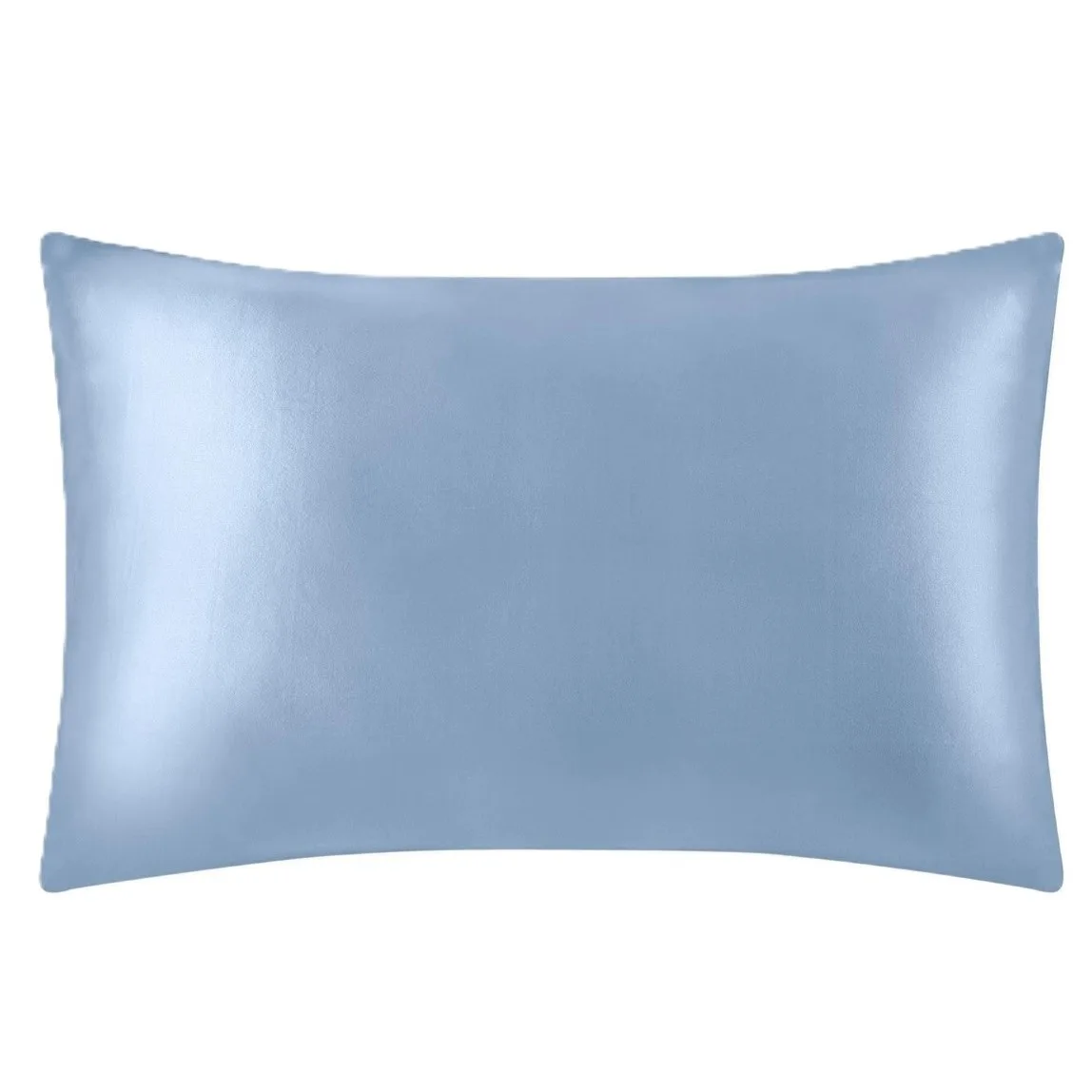
This current OlaSilk owner-page image shows a real zippered pillowcase and gift-box direction. It is useful for discussing product-to-pack matching. It does not verify the final packaging copy, identifier, destination or approved production artwork.
Separate legal copy, care copy and brand copy
Keep three information groups distinct in the approval record:
- required product, fibre, origin, responsible-business or other market information;
- product-specific care wording with its documented basis;
- optional brand, campaign and product-benefit copy.
For a U.S. example, the Federal Trade Commission's current textile and wool labeling guidance describes fibre content, country of origin and responsible-business identity for covered textile products. It also gives pillowcase placement guidance. The appointed U.S. compliance owner still needs to confirm product coverage, exact wording and placement for the identified SKU.
Do not convert a certification badge, material record or supplier description into a broader finished-product promise. A document needs a clear scope, date and issuing source. If the evidence covers only a material, it does not automatically validate a performance claim about the finished pillowcase or its package.
Keep the barcode under the identifier owner's control
The brand or other appointed identifier owner should supply the code allocated to the exact SKU. The packaging record should preserve both the human-readable value and the encoded value, then connect them to the product record before a scan test.
GS1's current GTIN Management Standard separates new products, product changes and packaging hierarchy levels. When a GTIN is used, the responsible owner decides whether the item or hierarchy level requires a distinct identifier under the applicable rules. OlaSilk should not invent, reuse or allocate a buyer's identifier from an artwork screenshot.
For barcode approval, record:
- identifier owner and assignment reference;
- exact SKU, market and packaging level;
- barcode symbology and encoded value;
- human-readable digits and artwork revision;
- size, quiet-zone and colour direction supplied by the responsible owner;
- print or label method and physical position;
- scan device or verification method, result and date;
- mismatch, correction and retest status.
A successful scan proves that the printed code can be read in the tested condition. It does not by itself prove that the code was assigned to the correct product, that a retailer has accepted it or that every production pack will print identically.
Map each artwork file to a physical surface
The pack record should show where every file appears. Use a surface map that distinguishes the sewn or printed product label, care label, insert, belly band or sleeve, box, barcode sticker, shipper label and master carton mark. Not every project uses every surface; mark unused fields as not applicable rather than deleting them.
| Surface | Controlled content | Physical check | Evidence saved |
|---|---|---|---|
| Pillowcase label | Approved brand, fibre, origin, care or responsible-business fields as applicable | Position, seam interaction, legibility and orientation | Close-up photo plus artwork revision |
| Insert or card | Approved instructions and brand copy | Correct side, language, SKU and orientation | Front/back photo plus filename |
| Sleeve or box | Product identity, colour/size cue and approved market copy | Product fits; copy remains visible; closure is secure | Packed sample photos |
| Barcode label | Owner-supplied identifier and human-readable value | Correct SKU, placement and scan result | Value record plus scan log |
| Shipper or carton | Project, SKU, quantity and handling marks supplied for the project | Inner-to-outer quantity and destination match | Carton photo and pack list |
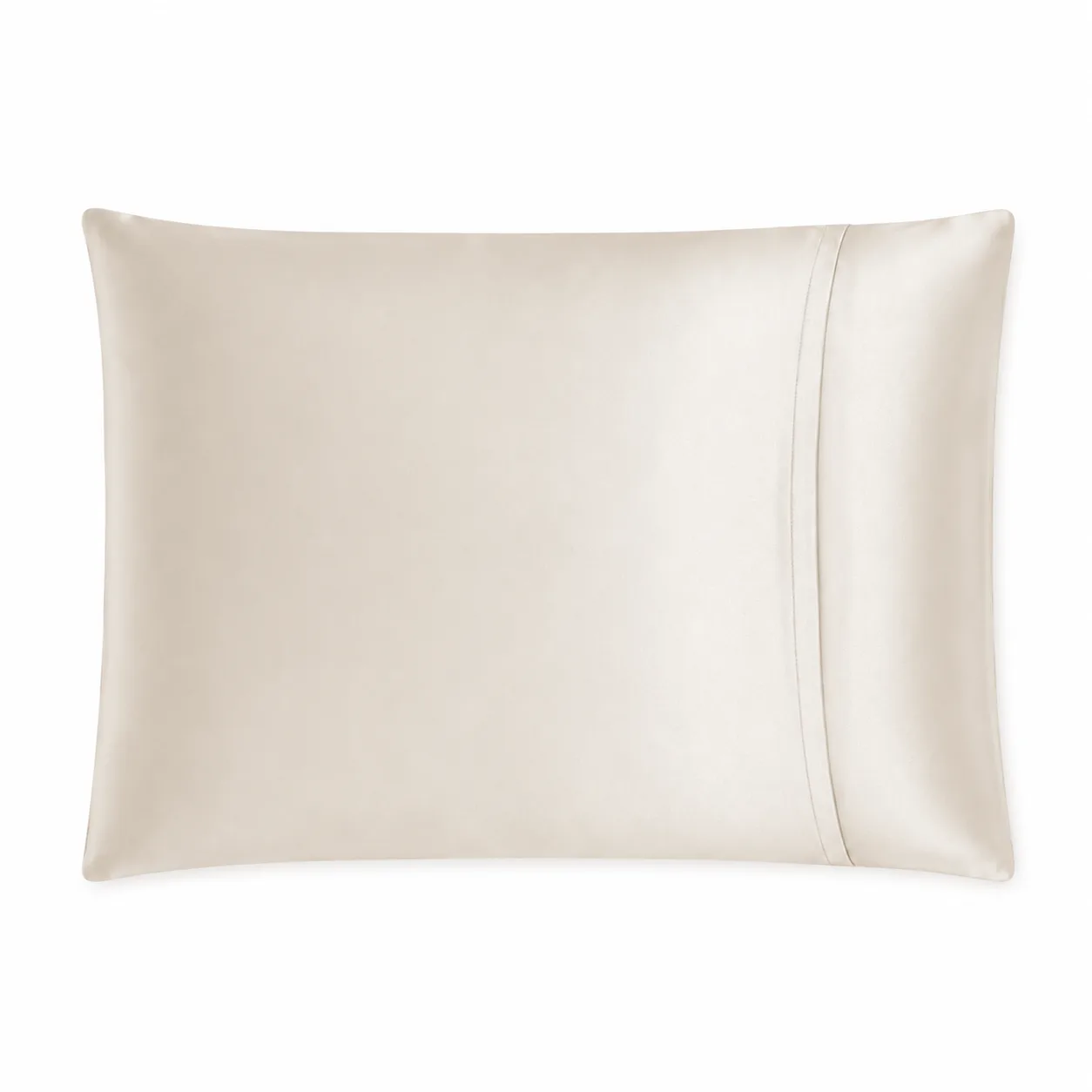
This distinct owner-page image shows an envelope pillowcase with a gift-box direction. It helps the team confirm which physical SKU is being packed. Closure approval belongs in the existing zipper-versus-envelope sample record; the retail-pack record should reference that decision instead of reopening it.
Use one artwork filename and revision system
Name each file so a reviewer can identify the project, SKU, market, language, surface and revision without opening it. For example, the record might contain fields for `PROJECT-SKU-MARKET-SURFACE-R03`, while the brand chooses its own actual naming convention.
Every change should create a visible revision. Mark the replaced file superseded, record why it changed and link the next sample or proof to the new revision. Never let “final,” “final2” and an email attachment compete as approval sources.
For each revision, capture:
- source copy owner;
- change request and affected surfaces;
- designer or prepress handoff;
- digital-proof status;
- physical-sample status;
- conditional approvals and unresolved items;
- final approver and approval time;
- superseded filename and replacement filename.
Check placement on the packed physical sample
Approve the physical pack in the same orientation and sequence intended for the project. Confirm that the folded pillowcase is the correct SKU, the visible label belongs to that product, the insert faces the expected direction, the barcode remains accessible, and no fold, seal or edge hides critical copy.
This current owner-page image is labelled for logo-placement review. It can support a placement discussion, but a visible logo area is not an approved artwork measurement. Record the exact file, size, orientation and physical-sample result separately.
Photograph the front, back, open pack, product label, barcode, insert and any carton link that matters to the approval. Put the sample ID and artwork revision in the photo record. A photo without those identifiers is useful reference material but not a controlled repeat-order standard.
Silk pillowcase retail pack approval checklist
- The physical pillowcase sample has a project and SKU identifier.
- Size, colour, closure and relevant construction fields match the product record.
- Destination, language and sales route are confirmed.
- The owner of fibre, origin, care and responsible-business copy is named.
- Every required copy field is approved for the identified SKU and market.
- Marketing claims remain separate from required or evidence-based information.
- The buyer-supplied GTIN or other identifier is linked to the exact SKU.
- Human-readable and encoded barcode values match the controlled record.
- Barcode placement and physical scan result are documented.
- Product label, insert, sleeve or box, sticker and carton files have revisions.
- Dieline, position, orientation and print-finish decisions are recorded.
- The packed sample uses the approved product and artwork revisions.
- Front, back, open-pack, label and barcode photos are linked to the sample.
- Conditional approvals have an owner, missing evidence and due date.
- Superseded files are clearly separated from the approved set.
- The retained packout reference is identified for repeat-order comparison.
The custom silk product sampling checklist connects artwork control to sample rounds and retained references. The private-label silk project guide places the pack record inside the wider sourcing handoff.
Who this retail pack record suits
This record suits private-label brands, retailers, distributors and gift-program buyers that have already selected a silk pillowcase direction and now need one approval trail across product, compliance, identifier, design, sourcing and packaging owners. It is especially useful when one project has several sizes, colours, markets or packaging surfaces.
It does not suit a team that has not yet chosen the physical pillowcase construction, destination or identifier owner. Those decisions come first. It also does not replace a market-specific legal review, barcode allocation service, laboratory evidence or a retailer's own packaging acceptance process.
FAQ
Can one box artwork cover several pillowcase sizes or colours?
Only after the appointed product and identifier owners confirm the shared and variable fields. Keep separate SKU rows until the size, colour, barcode, copy and physical pack differences are explicit.
Does OlaSilk provide a GTIN for the buyer's SKU?
The buyer or appointed identifier owner should supply and authorize the identifier. OlaSilk can place the approved value in the controlled artwork and help check it against the identified sample; this article does not allocate GTINs.
Is a digital artwork proof enough for retail-pack approval?
It can approve a file stage, but it does not show the packed product, fold, orientation, label position, print result or physical barcode scan. Link the digital proof to a physical-sample record before final release.
Should the zipper or envelope decision be made during pack approval?
It should already be controlled in the product and sample record. The retail-pack review confirms that the packed physical SKU matches that decision; it should not silently change the closure.
What happens when label copy or the identifier changes?
Open a new artwork revision, identify every affected surface, produce a new proof or sample as required, retest the barcode and supersede the old files. Do not overwrite the prior approval trail.
Prepare a silk pillowcase retail pack RFQ
Share the exact SKU list, pillowcase size, colour and closure, destination market, buyer-approved fibre/origin/care and responsible-business copy, buyer-supplied identifiers, artwork files and revisions, packaging surfaces, print directions, quantity range, target timing and any open evidence or approval fields.