Zipper vs Envelope Silk Pillowcase: What to Approve on the Sample
A private-label sample guide for comparing hidden-zipper and envelope silk pillowcase closures, recording construction evidence, and closing open points before bulk.
Review the matched product or buyer guide selected in this article.
On this page
- Quick answer: approve the construction, not the closure name
- Define the insert, finished size and channel first
- What an envelope closure sample must show
- What a hidden zipper sample must show
- Zipper vs envelope sample decision matrix
- Measure in one agreed state
- Connect closure approval to material, labels and packaging
- Physical-sample approval record
- Closure sample checklist
- Who this guide is for
- FAQ
- Is a zipper closure always more secure than an envelope?
- Can a product photo approve the closure?
- Should the buyer set one standard overlap or zipper opening?
- What should be retained after approval?
- Prepare a closure-specific RFQ
Choosing a closure is not a styling footnote. It changes what a buyer must define, inspect and retain before a private-label silk pillowcase moves toward bulk production. A useful sample review does not declare one closure universally better. It records the pillow insert, finished size, construction, hardware or overlap, label position, packaging direction and the evidence still missing.
Buyer decision: choose the closure against the named sales channel and insert, then approve a measured physical sample and one controlled specification. A product photo can show the visible direction; it cannot prove finished dimensions, hidden seam construction, laundering performance or bulk consistency.
Quick answer: approve the construction, not the closure name
“Hidden zipper” and “envelope” are starting labels, not complete specifications. Two suppliers can use the same label for visibly different openings, overlap depths, slider positions, seam finishes and insert access.
Before choosing, record:
- the finished pillowcase size and the actual insert used for review;
- the silk material and project-specific momme direction;
- the closure location, opening length and intended outside appearance;
- the label, logo and care-copy position near the opening;
- the sales channel and packaging format;
- the sample revision, open points, approver and retained reference.
Use the custom silk pillowcase owner page to compare current OlaSilk product directions. This article covers closure approval only; it does not replace the product specification or quote.
Define the insert, finished size and channel first
A closure cannot be reviewed in isolation from the insert. Name the insert dimensions, fill or firmness used for the sample review and the agreed state in which the pillowcase will be measured. Record whether the sample is empty, fitted or both. Otherwise, “secure fit” and “easy insertion” remain impressions rather than repeatable observations.
Channel context also changes the review. A beauty brand may prioritize a clean photographed edge and branded gift presentation. A hotel or spa programme may focus on repeated handling, label visibility and a controlled replacement record. A gift programme may need the opening to work with a defined fold and box insert. These are project questions, not universal claims about either closure.
Select momme against the product construction and required hand feel, then confirm it on the sample and project record. The silk momme guide explains how weight decisions relate to product use without turning one momme value into a universal answer.
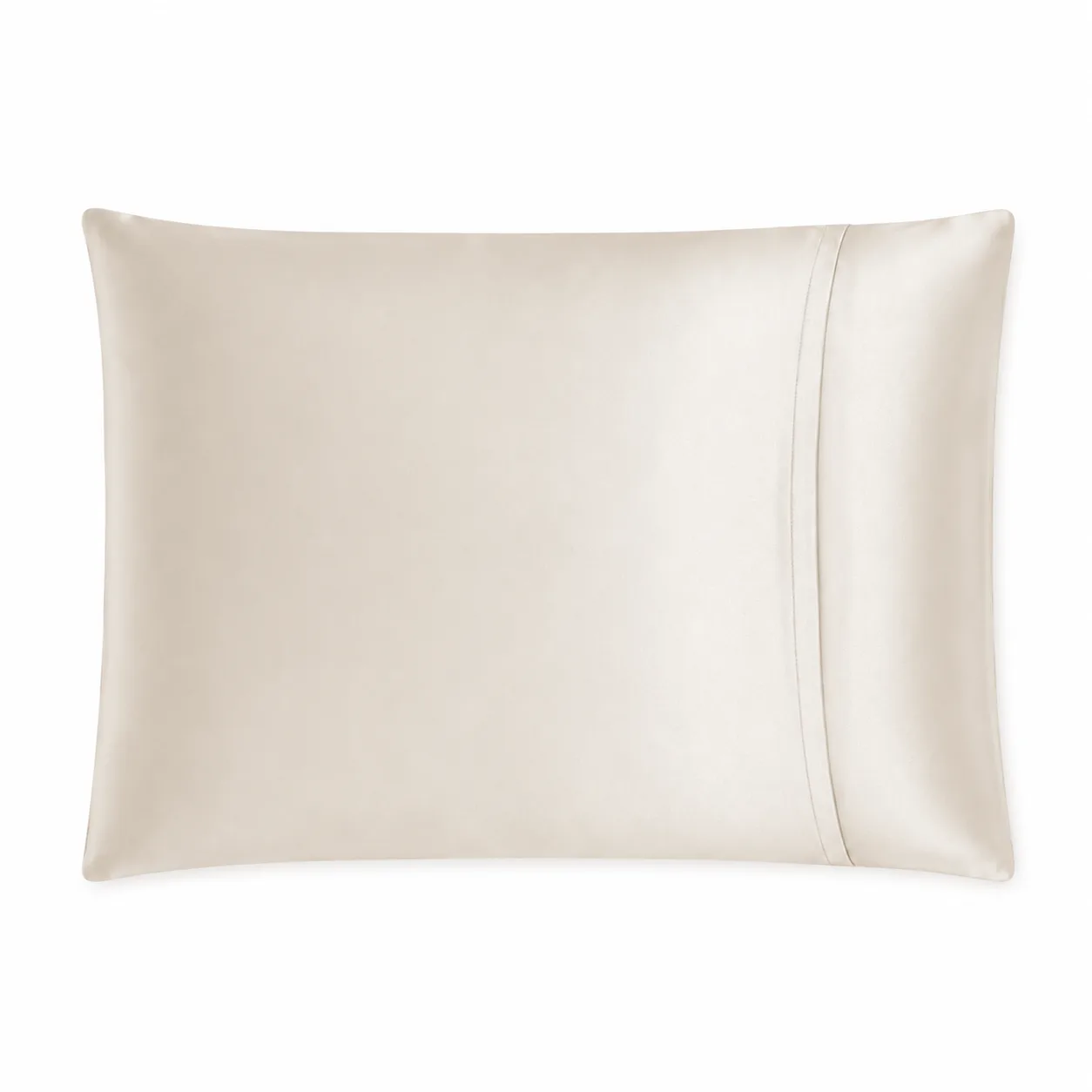
The image above shows a real OlaSilk envelope-style pillowcase and its visible pack direction. It does not establish the overlap measurement, insert retention, seam allowance, care result or approval status for another project.
What an envelope closure sample must show
An envelope sample should make the overlap and opening easy to identify. Lay the empty pillowcase in the agreed orientation, then record the opening location and the flap relationship to the finished dimensions. Fit the named insert and observe the opening again without stretching or arranging it only for the photograph.
Check and record:
- flap and opening position in the empty and fitted states;
- whether the insert, inner seam or care label becomes visible in ordinary handling;
- alignment of the overlap with the side seams and finished edge;
- puckering, twisting or bulk at the flap junction;
- label and logo placement relative to the opening;
- insertion and removal steps for the named insert;
- the approved fold and packout state.
Do not copy an overlap number from another article or supplier. The required geometry depends on the finished size, insert and agreed construction. Put the project value in the specification and compare the physical sample with that value.
What a hidden zipper sample must show
A hidden zipper sample needs more than a closed product photo. Record which edge contains the zipper, where the opening starts and ends, how the slider is parked and what fabric or seam structure separates hardware from the intended contact area.
Inspect both the closed and open states:
- zipper tape alignment and stitching continuity;
- slider travel through the usable opening;
- the closed-end and open-end finishing;
- visible waviness, puckering or distortion along the zipper edge;
- access for the named insert without forcing the opening;
- slider position when the pillowcase is fully closed;
- label, logo and care-copy clearance;
- the appearance of the edge in the approved packout.
Do not infer durability, snag resistance, comfort or wash performance from the image. Those require an agreed review method and actual observation. The silk product care and washing guide can support project care discussions, but the sample record must state what was actually reviewed.
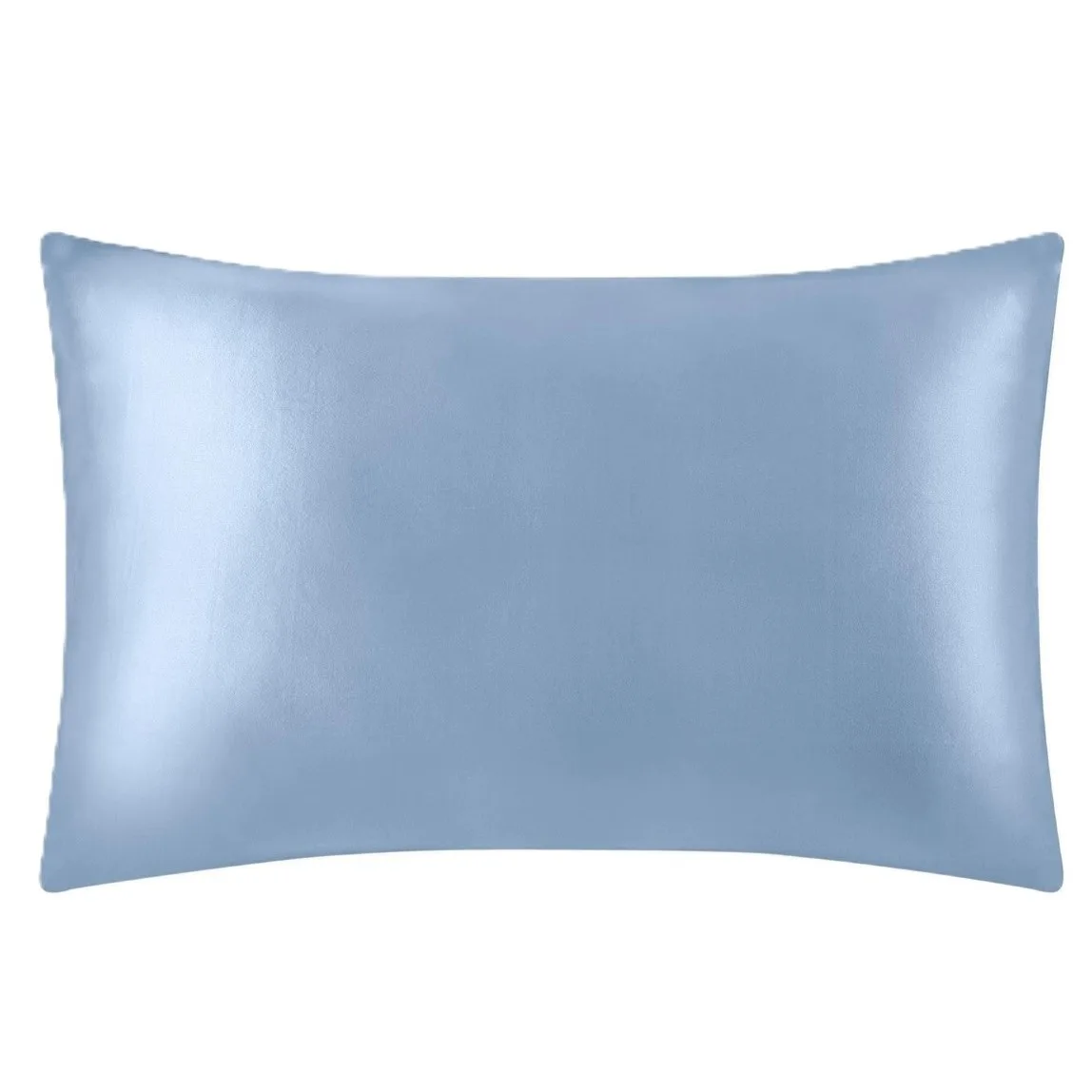
This real OlaSilk image shows the product direction and box presentation. It cannot prove zipper-component specification, seam strength, insert fit, wash performance or production release.
Zipper vs envelope sample decision matrix
Use the matrix to identify evidence, not to award a generic winner.
| Buyer requirement | Envelope sample evidence | Hidden-zipper sample evidence | Open question to close |
|---|---|---|---|
| Named insert fit | Empty/fitted opening and flap relationship | Usable opening, slider travel and fitted edge | Which insert and review state govern approval? |
| Outside appearance | Flap alignment, edge and seam visibility | Closed zipper edge, waviness and slider parking | Which face and edge appear in product photography? |
| Hardware boundary | No zipper hardware; inspect overlap bulk and labels | Record tape, teeth, puller and separation from contact area | Is a component specification or colour approval required? |
| Insertion process | Opening access with the named insert | Opening length and access without forcing | Who repeats and signs the insertion observation? |
| Label and logo | Clearance from flap and seam junction | Clearance from zipper tape, stops and slider | Which controlled artwork and placement reference apply? |
| Packaging | Approved fold without hiding an open issue | Closed state and slider position in the fold | Does the box or insert require another sample round? |
| Care review | Observe the specified sample after the agreed method | Observe fabric, zipper edge and slider after the agreed method | What method, sample count and decision rule were agreed? |
If a row has no evidence or owner, mark it open. “Looks good” does not close a construction requirement.
Measure in one agreed state
Measurements become misleading when different reviewers flatten, stretch or fit the pillowcase differently. The project record should define the surface, orientation, empty or fitted state, measuring points, tool and responsible reviewer. Record the observed value without turning a single sample into a bulk guarantee.
For an envelope style, the record may include finished size, opening location, overlap relationship and seam alignment. For a zipper style, it may include finished size, zipper location, usable opening, closed-end positions and slider parking. The actual fields and tolerances belong to the approved project specification; this guide does not supply universal tolerances.
Use photographs as supporting evidence. Include one overall view, one opening detail and one label or packout view with the sample revision identified. Photographs should not replace the numeric or written record.
Connect closure approval to material, labels and packaging
OlaSilk is a Qingdao source silk factory serving B2B private-label projects. Current pillowcase directions can include 100% mulberry silk, project-specific momme, colour, size, logo, label, closure and packaging choices. Each selected field still needs confirmation for the named project.
Documentation such as OEKO-TEX Standard 100, Sedex or ISO 9001 support should be discussed only within its current and applicable scope. A certification reference does not prove a closure’s fit, hardware performance, wash result or destination-market acceptance.
Do not assume a general MOQ, sample-day figure or bulk lead-time figure applies to every closure and pack combination. Ask for the current project quote after size, silk, closure, colour, logo, packaging, quantity and destination are defined.
The private-label silk packaging guide helps organize pouch, card and box choices. A packaging selection can trigger another closure review if the fold, label visibility or slider position changes.
Physical-sample approval record
Use one row per observable requirement and keep the revision history.
| Field | Project specification | Sample observation | Evidence | Decision / owner |
|---|---|---|---|---|
| Sample identity | Code and revision | Received item and date | Label/photo | Open / pass / conditional / revise |
| Insert and state | Named dimensions and review state | Insert actually used | Insert record + overall photo | Decision and owner |
| Finished size | Project measuring method and values | Recorded sample values | Dated measurement sheet | Decision and owner |
| Closure location | Named edge and orientation | Observed position | Overall and detail photo | Decision and owner |
| Envelope construction | Project flap/opening fields | Observed relationship | Detail photo + measurement | Decision and owner |
| Zipper construction | Component and opening fields | Observed tape/slider/finish | Open/closed detail photos | Decision and owner |
| Label / logo | Controlled file and placement | Observed version and location | File reference + photo | Decision and owner |
| Packout | Fold, pouch, insert and box revision | Assembled sample observation | Packout photo | Decision and owner |
| Care review | Agreed method and decision rule | Actual observation | Dated review record | Decision and owner |
Use `pass` only for a closed field. Use `conditional` when a named correction or document remains and an owner accepts the condition. Use `revise` when the construction, file or sample must be replaced and reviewed again.
Closure sample checklist
- Sales channel, destination, finished size and named insert are recorded.
- Silk material and project-specific momme direction are linked to the sample revision.
- Closure type, location and opening orientation are written, not assumed from a photo.
- Envelope overlap or zipper construction fields use project values rather than copied defaults.
- Empty and fitted states have been reviewed using the agreed method.
- Seam, edge, flap or zipper details have dated close-up evidence.
- Logo, label and care-copy versions and positions are identified.
- Packaging fold, pouch, insert and box direction are connected to the closure review.
- Open points have an owner, due date and required next evidence.
- The approval decision and retained physical reference are recorded.
The wider custom silk product sampling checklist can connect this closure record to colour, material, branding, packaging and pre-production decisions.
Who this guide is for
This workflow is for beauty, sleep, hotel, spa and gift brands that have selected a pillowcase direction and need to control a private-label sample. It is not a substitute for physical sampling, agreed testing, destination-market advice or a project-specific specification. Buyers still comparing broad pillowcase options should start with the product owner before opening a closure approval record.
FAQ
Is a zipper closure always more secure than an envelope?
Not as a universal statement. Insert dimensions, opening geometry, construction and handling all affect the observed result. Compare the named insert in the agreed sample state and record what the physical sample shows.
Can a product photo approve the closure?
No. A photo can document visible direction and support a revision record. It cannot establish hidden construction, measurements, care performance or bulk consistency.
Should the buyer set one standard overlap or zipper opening?
Use project-specific values tied to the finished size, insert and construction. Do not import a universal number from a competitor page or an unrelated programme.
What should be retained after approval?
Retain the signed specification, measurement and observation record, controlled artwork, dated photographs and the identified physical sample. Record later changes against that revision.
Prepare a closure-specific RFQ
For a useful feasibility reply, send the pillowcase size, named insert, silk and momme direction, zipper or envelope preference, colour, logo and label files, packaging concept, quantity range, destination market and target timing. Mark which fields are fixed and which need sampling advice.