How to Review a Silk Bonnet Sample Before Bulk Production
A practical approval checklist for brands checking silk bonnet material, measurements, closures, seams, labels, packaging, and sample corrections.
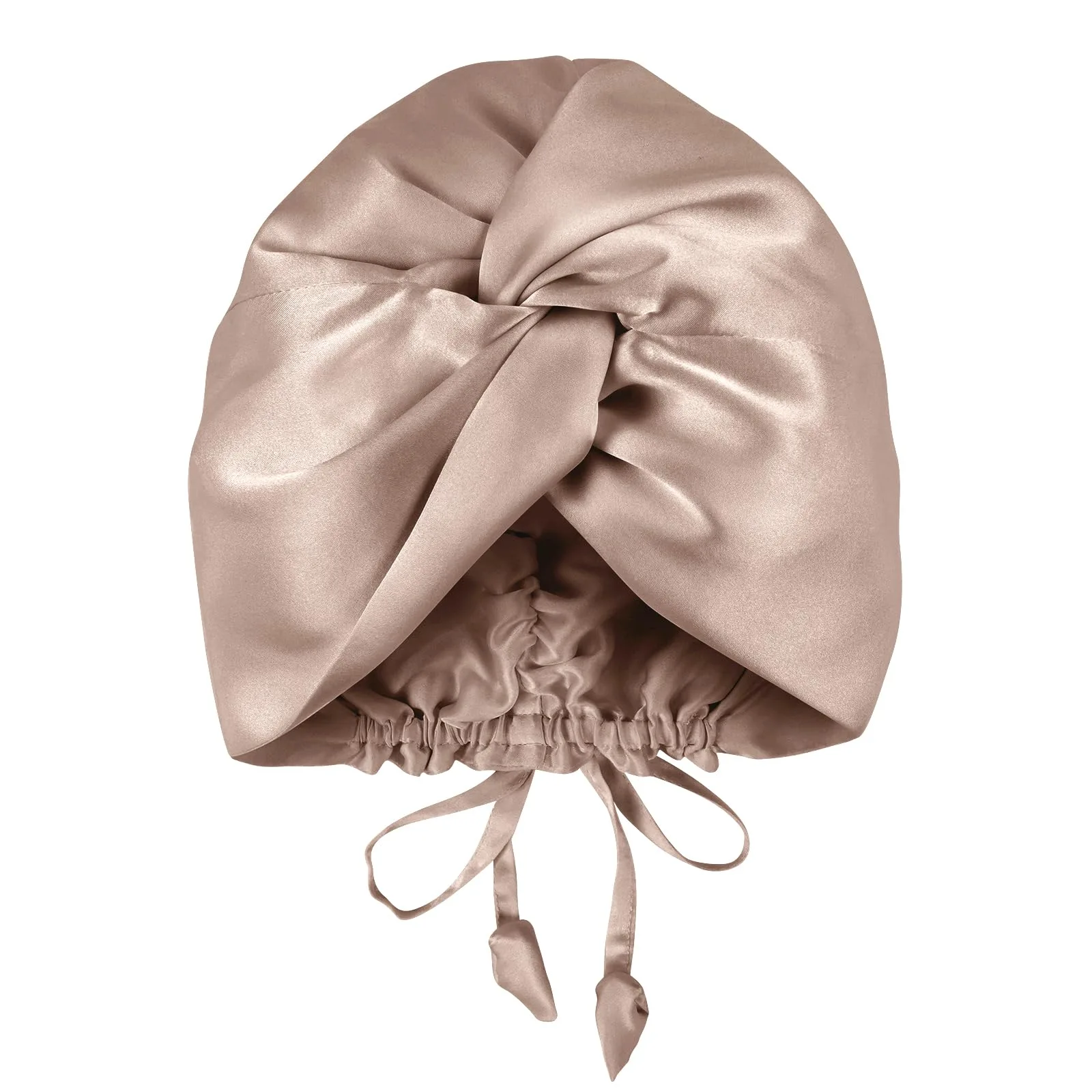
Review the matched product or buyer guide selected in this article.
On this page
Quick answer: Approve a silk bonnet sample only after checking the material declaration, finished measurements, band or closure, inside construction, and branding and packaging against one written specification. Photograph the sample, record the measurements, and list every correction before bulk production. A polished front-view photo is not enough to approve fit, seam finish, label placement, or pack-out.
OlaSilk is a Qingdao source silk factory for B2B private label projects. For custom silk bonnets, published planning facts include 100% mulberry silk in 16/19/22/25/30 momme options, MOQ from 10 pieces in stock colors (custom Pantone dyeing carries a higher dye-lot minimum) for suitable specifications, sample development around 7 days, and bulk production around 25 days, depending on material, color, logo, and packaging requirements. OlaSilk supports OEKO-TEX Standard 100, Sedex advanced membership, and an ISO 9001 factory system. Our silk sleep cap and bonnet range includes different dome shapes, single- and double-layer constructions, elastic, drawstring, button, and tie-back options.
This checklist is suitable for private label teams that already have a physical bonnet sample and a written specification. It may not suit an early concept-stage project where material, dimensions, or construction have not yet been selected.
Start with the approved specification, not memory
Put the sample beside the latest signed specification sheet, artwork, color reference, and packaging file. If a decision was made in email or chat but never added to the specification, record it before approval. This prevents the factory and buyer from working from different versions.
| Approval area | What to record | Why it matters |
|---|---|---|
| Product identity | Style name, sample date, revision number, and color | Keeps later comments attached to the correct sample |
| Material | Fiber declaration, fabric construction, momme where specified, and layer count | Separates what was ordered from what the surface merely looks like |
| Finished size | Opening, band width, dome depth, and any long-hair extension dimensions | Makes fit comments measurable |
| Closure | Elastic, drawstring, button, buckle, or tie dimensions and position | Defines how the bonnet is secured |
| Branding | Label type, logo size, position, orientation, and artwork version | Prevents approval of the right product with the wrong branding |
| Packaging | Pack format, insert, barcode or SKU label, and quantity per pack | Connects product approval to the actual sales channel |
1. Verify material and layer construction
Read the sewn-in label or the sample specification instead of judging fiber content from shine or softness. Silk is a fiber; satin describes a weave and can be made from different fibers. If the bonnet uses different materials in the crown, band, lining, or trim, record those sections separately.
OlaSilk's current sleep-cap range includes product directions using 19- and 23-momme mulberry silk as well as single- and double-layer structures. That does not mean every style should use the same weight or layer count. Confirm that the received sample matches the version quoted for your project.
Turn the bonnet inside out and check:
- whether the inner layer matches the approved material and color;
- whether seams, thread ends, joins, and gathered areas are finished consistently;
- whether any rough component or exposed edge sits where it could contact the wearer;
- whether the inside construction is the same on every sample unit;
- whether the care and fiber information matches the actual construction being ordered.
For products intended for the United States, the FTC's Textile Fiber Rule explains required fiber, business identity, and country-of-origin disclosures for covered textile products. Treat this as a compliance checkpoint, not legal advice; confirm the final label for each target market.
2. Measure capacity and finished dimensions
A statement such as “large bonnet” is not an approval standard. Use a flexible tape and record the finished measurements in the same positions on every revision.
Measure the opening, relaxed band, stretched band where relevant, band width, crown or dome depth, and the usable length of any long-hair or pineapple shape. Then compare those figures with the target wearer profile: short hair, high-volume curls, braids, extensions, wigs, or another defined use case.
Do not approve fit from a flat-lay image. Review the physical sample on an appropriate fitting form or wearer test arranged by your brand. Note whether the product stays in position, creates unwanted pressure, leaves excess bulk, or changes shape after repeated fitting. Convert each observation into a measurable correction—for example, a revised opening or band dimension—rather than writing only “too tight” or “too loose.”
3. Inspect the band, closure, and seams
The closure changes both fit and production consistency. OlaSilk's published range includes elastic bands, adjustable drawstrings, buttons, tie-back ribbons, and other adjustable structures. Approve the exact mechanism in your sample.
For elastic, check width, recovery, join position, and whether gathering is distributed evenly. For a drawstring or toggle, check the travel range, component position, and whether the cord ends are finished. For tie-back designs, compare strap length, width, stitching, and symmetry. For button or buckle adjustments, check every position rather than only the default setting.
Inspect stitching around the full circumference. Record skipped stitches, puckering, twisting, uneven seam allowance, asymmetric gathering, or loose threads with close-up photographs. Mark the location on the photograph so the supplier does not have to guess which seam you mean.
4. Lock the logo, label, and packaging
Check branding at the same time as construction. A technically acceptable bonnet can still fail approval if the woven label is reversed, embroidery distorts the band, the care label is uncomfortable, or the logo is hidden after folding.
Confirm:
- logo or label artwork version;
- finished logo dimensions and placement measured from a fixed seam or edge;
- thread or print color against the approved reference;
- label orientation after the bonnet is worn and after it is folded;
- all fiber, care, country-of-origin, SKU, and barcode information required for the intended market;
- packaging dimensions and how the product sits inside the pouch or box.
Use the private label silk packaging guide when the product must fit a retail box, gift set, salon display, or marketplace pack-out.
5. Record a repeatable approval decision
A useful approval is one of three outcomes:
- Approved: the sample matches the recorded specification and can become the production reference.
- Conditionally approved: only named corrections are required, and the buyer has stated whether photographs, measurements, or another physical sample must confirm them.
- Rejected: the mismatch affects material, construction, fit, branding, packaging, or another requirement strongly enough that a new sample is needed.
Do not combine approval with vague future comments such as “looks good, please improve the band.” Either define the correction and verification method or keep the sample unapproved.
- ✓Sample ID, date, color, and revision number recorded
- ✓Fiber declaration, momme where specified, and layer construction checked
- ✓Opening, band, crown, and long-hair dimensions measured
- ✓Elastic, drawstring, button, buckle, or tie closure tested
- ✓Inside seams, gathering, thread ends, and symmetry photographed
- ✓Logo, label, care information, and placement compared with artwork
- ✓Packaging, insert, barcode, SKU label, and pack-out checked
- ✓Corrections assigned with an owner and required verification method
- ✓Approved reference sample retained for comparison with bulk production
The broader custom silk product sampling checklist can be used for color, packaging, and production-record checks that apply beyond bonnets.
FAQ
Should a bonnet sample be approved from photos?
Photos can confirm visible color direction, logo position, and some workmanship details. They cannot reliably confirm dimensions, fit, band pressure, hand feel, inside construction, or how the product sits in its packaging. Use a physical sample when those decisions affect approval.
What should be sent with revision comments?
Send the sample ID, specification version, one numbered list of corrections, annotated photographs, revised measurements, and the required verification method. Avoid splitting conflicting instructions across several messages.
Does every correction require another physical sample?
Not necessarily. The buyer should decide according to the risk of the change. A measurable artwork-position correction may be confirmable by photos and dimensions; a change to material, fit, band tension, or construction normally needs physical confirmation before bulk approval.
Prepare the next sample or quotation
If you are reviewing a silk bonnet project, send the target style, quantity range, material and layer direction, finished dimensions, closure, logo or label artwork, packaging format, and the corrections found in your current sample.