How Hair-Care Brands Compare Silk and Satin Bonnet Specifications Before Sampling
A practical B2B guide to comparing fibre declarations, fit, layers, branding, packaging, and sample approval points for silk and polyester satin bonnets.
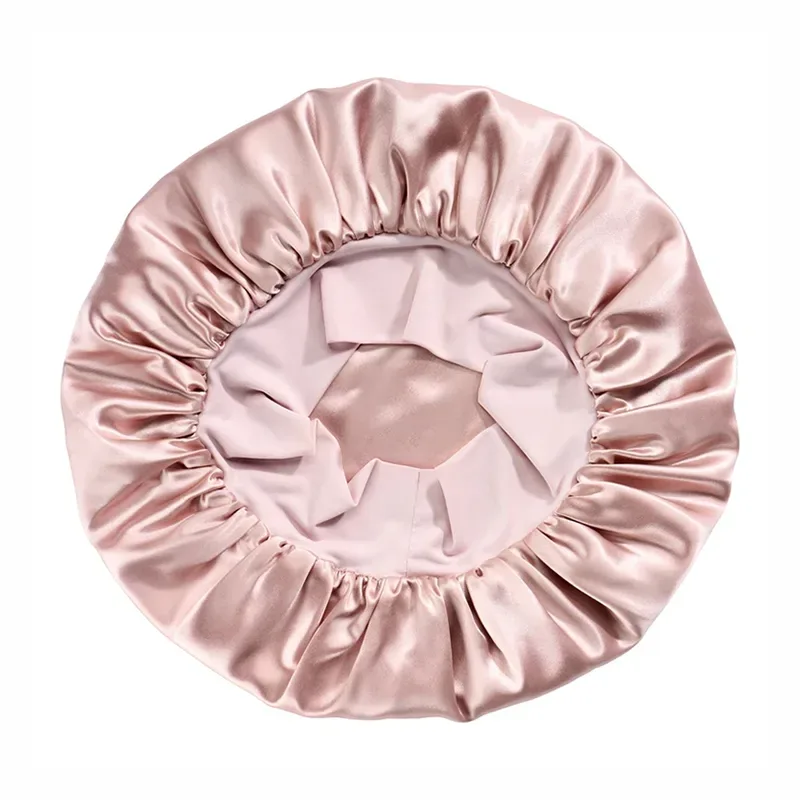
Review the matched product or buyer guide selected in this article.
A bonnet sample should answer more than “does it look premium?” For a hair-care, wig, or beauty brand, the useful comparison is whether the declared material, construction, fit, branding, and packaging match the product position you plan to sell.
The key distinction is simple: silk is a fibre; satin is a weave structure. A satin bonnet may be made from silk, polyester, or another fibre. Put the fibre content and the weave on separate lines in your specification so your supplier, packaging team, and customer-facing copy all describe the same product.
Table of contents
- Start with the product position
- Silk and polyester satin: specification comparison
- Fit, band, layers, and seams
- Branding, colour, and packaging
- How to review the physical sample
- What to send in an RFQ
- Frequently asked questions
Start with the product position
Do not begin by asking a satin bonnet manufacturer for “the best bonnet.” Begin with the sales channel, wearer, and product promise.
A silk option can suit a premium sleep, hair-care, spa, or gift programme where natural-fibre positioning and a refined hand feel are central to the offer. A polyester satin option can suit a more accessible range, a broad colour programme, or a project where the brand deliberately specifies a synthetic fibre. Neither description should be blurred: “satin” alone does not prove fibre content.
Before requesting samples, decide:
- who will wear it: short hair, curls, braids, locs, wigs, extensions, or mixed users;
- where it will sell: salon, beauty retail, e-commerce, gift set, subscription box, or wig aftercare;
- whether the range is premium, entry, or tiered;
- whether the bonnet is a stand-alone SKU or part of a coordinated set;
- which claims your packaging can support with material documentation.
The sourcing shortcut: Choose the product position first, then compare materials and construction against it. A sample can only be judged properly when the intended wearer and channel are already defined.
Silk and polyester satin specification comparison
| Decision point | Silk satin bonnet | Polyester satin bonnet | What to record on the sample sheet |
|---|---|---|---|
| Fibre declaration | Silk is the fibre; the fabric may use a satin weave | Polyester is the fibre; satin describes the weave | Exact fibre composition and fabric construction |
| Weight language | Use momme when the silk specification is expressed that way | Do not use silk momme as a substitute for a polyester fabric weight | Supplier’s stated weight unit and test method |
| Product position | Premium natural-fibre, sleep, beauty, spa, or gifting programmes | Accessible collections, wide colour programmes, promotional or volume-led ranges | Target channel and planned retail tier |
| Hand feel | Review smoothness, drape, surface consistency, and both sides of the fabric | Review smoothness, static feel, sheen, and consistency between lots | Signed physical swatch or approved sample |
| Construction | Single or double layer; silk on one or both relevant surfaces must be stated | Single or double layer; outer and lining fibre must be stated separately | Layer count and fibre for every layer |
| Labelling | Fibre claim must match the supplied material and packaging copy | Avoid presenting polyester satin as silk | Sewn label, care label, and packaging wording |
For silk programmes, compare the momme options offered for the specific construction rather than assuming that the highest number is automatically the right answer. A heavier silk may change drape, bulk at the seam, and how a gathered edge sits. The right decision is the one that matches your fit, look, and price architecture. Use the existing silk sleep cap product page to review the available customization direction, then confirm the selected fabric on a physical sample.
Fit, band, layers, and seams
Material alone does not determine whether a bonnet works for its intended wearer. Construction choices often create the most obvious sample failures.
Bonnet depth and hair volume
Define an internal depth or usable volume, not only a flat diameter. A shallow round bonnet may suit shorter or lower-volume styles but compress braids, locs, extensions, or thick curls. An extra-long or deeper shape can hold more hair, but the pattern still needs to distribute volume without pulling the band backwards.
Prepare at least one representative fit test for the intended use. If the range serves several hair volumes, decide whether you need multiple sizes or an adjustable construction. The sleep cap size and fit guide explains the measurements to review before approval.
Band, tie, or elastic
Compare the closure as a system:
- encased elastic: inspect recovery, gathering, pressure, and whether elastic can twist inside the casing;
- wide wrap band: inspect stretch, edge finishing, and whether the band rolls during movement;
- adjustable tie: inspect tie length, knot position, and whether repeated tying distorts the front;
- button or adjuster: inspect placement and any hard component that could contact the wearer.
Do not approve the closure after one static fitting. Repeat the on-off cycle and check whether the opening returns to its documented measurement.
Single versus double layer
A second layer changes weight, opacity, seam bulk, and packing volume. Record the fibre of both the outer and lining. “Double layer” is incomplete if one surface is silk and the other is not declared.
For reversible designs, inspect both directions as finished products. Labels, seam allowances, and logo placement must still make sense when the bonnet is turned.
Seam placement and finishing
Turn the sample inside out. Check seam position, loose threads, puckering, sharp label corners, exposed elastic joins, and bulky intersections. Compare the first measurement with the approved pattern and note the tolerance you expect in production. A smooth fabric cannot compensate for a seam or label that rubs in the wrong place.
Branding, colour, and packaging
A logo that looks correct on a flat artwork file may look distorted after the band stretches or gathers. Confirm the real placement on the worn sample.
Record:
- logo method, dimensions, colour reference, and distance from the centre or seam;
- woven or printed label size, fold, position, and which side faces the wearer;
- care-label content and whether the fibre wording matches the product specification;
- approved colour reference and viewing conditions;
- print scale, repeat, orientation, and placement tolerance;
- packaging size after the bonnet is folded without excessive compression.
For custom colour, use the approval stage appropriate to the material and process, such as a physical colour swatch, lab dip, or printed strike-off. Keep the approved reference with the sample record; screen colour alone is not a production standard.
Packaging should also match the sales channel. A compact pouch may work for travel or a coordinated hair-care set. A carton can provide more structure for gifting or retail display. An e-commerce mailer needs a different test from a shelf-ready pack. Confirm barcode space, legal copy, inserts, and the fibre statement before bulk packaging is printed.
If certification language will appear on the product page or package, verify the exact scope of the supporting document rather than using a generic badge. See what OEKO-TEX Standard 100 means for a sourcing review.
How to review the physical sample
Review the sample against a written sheet, not memory. Photograph the same views each round so changes can be compared.
- ✓Fibre composition and satin construction are declared separately
- ✓Silk momme or the correct non-silk weight unit is recorded
- ✓Outer and lining materials are identified
- ✓Opening, depth, usable volume, and key dimensions are measured
- ✓Fit is tested on the intended hair volume or representative form
- ✓Band, tie, elastic, or adjuster is cycled repeatedly
- ✓Inside seams, label edges, and elastic joins are checked
- ✓Logo size and position are reviewed on the worn sample
- ✓Colour or print is compared with the approved physical reference
- ✓Care label and packaging copy match the material declaration
- ✓Folded product fits the proposed packaging without distortion
- ✓One approved sample and revision notes are retained as the production reference
A useful review note is specific: “increase internal depth by the agreed amount while keeping the opening unchanged” is actionable. “Make it bigger” is not. Mark every requested change against the version number, then ask the next sample to identify what changed.
OlaSilk’s current private-label programme is managed from its Qingdao source factory. For suitable projects, the site currently presents a flexible starting quantity of 10 pieces, a target sample cycle of 7 days, and a target bulk-production cycle of 25 days. These are planning references, not a substitute for confirming the exact material, construction, artwork, packaging, quantity, and delivery requirements for your project. OEKO-TEX Standard 100, Sedex, and ISO 9001 evidence should likewise be checked against the scope relevant to the requested product and claim.
What to send in an RFQ
A strong RFQ shortens the distance between an idea and a comparable sample. Include:
- target wearer and sales channel;
- silk or polyester fibre requirement, plus the desired satin construction;
- silk momme preference if applicable;
- bonnet shape, depth, opening, and intended hair volume;
- single or double layer and the fibre for each layer;
- elastic, band, tie, or adjustment method;
- colour reference or print artwork;
- logo and label method, size, and placement;
- packaging format, insert, barcode, and compliance-copy needs;
- estimated sample and bulk quantities;
- target market and the decisions you need the sample to prove.
Frequently asked questions
Is satin the same as silk?
No. Silk identifies a fibre. Satin identifies a weave. Silk can be woven with a satin surface, while many satin bonnets use polyester. Ask for the exact fibre composition instead of relying on the word “satin.”
Should a polyester satin bonnet be measured in momme?
Momme is commonly used for silk fabric specifications. For a polyester satin option, ask the supplier to state the relevant fabric weight unit and construction rather than borrowing a silk momme description.
Is a double-layer bonnet always better?
Not automatically. It changes weight, opacity, warmth, seam bulk, and packing volume. It is useful when those changes support the intended wearer and channel. The outer and lining fibre should be declared separately.
Which fit details matter most for braids, locs, wigs, or extensions?
Internal depth, usable volume, opening measurement, closure recovery, and how the volume is distributed are more useful than a generic “one size” description. Test a representative hair volume before approval.
What should be approved before bulk production?
Approve the material declaration, fabric reference, dimensions, construction, closure, seam finish, artwork, colour or print, labels, care copy, and packaging. Keep the approved physical sample and written revision record together.
When you are ready to compare a silk bonnet sample against your channel and fit requirements, send OlaSilk the RFQ specification rather than requesting a generic catalogue quote.